
Netanyahu Rejects Trump’s Troop Withdrawal Demand: White House Showdown Looms
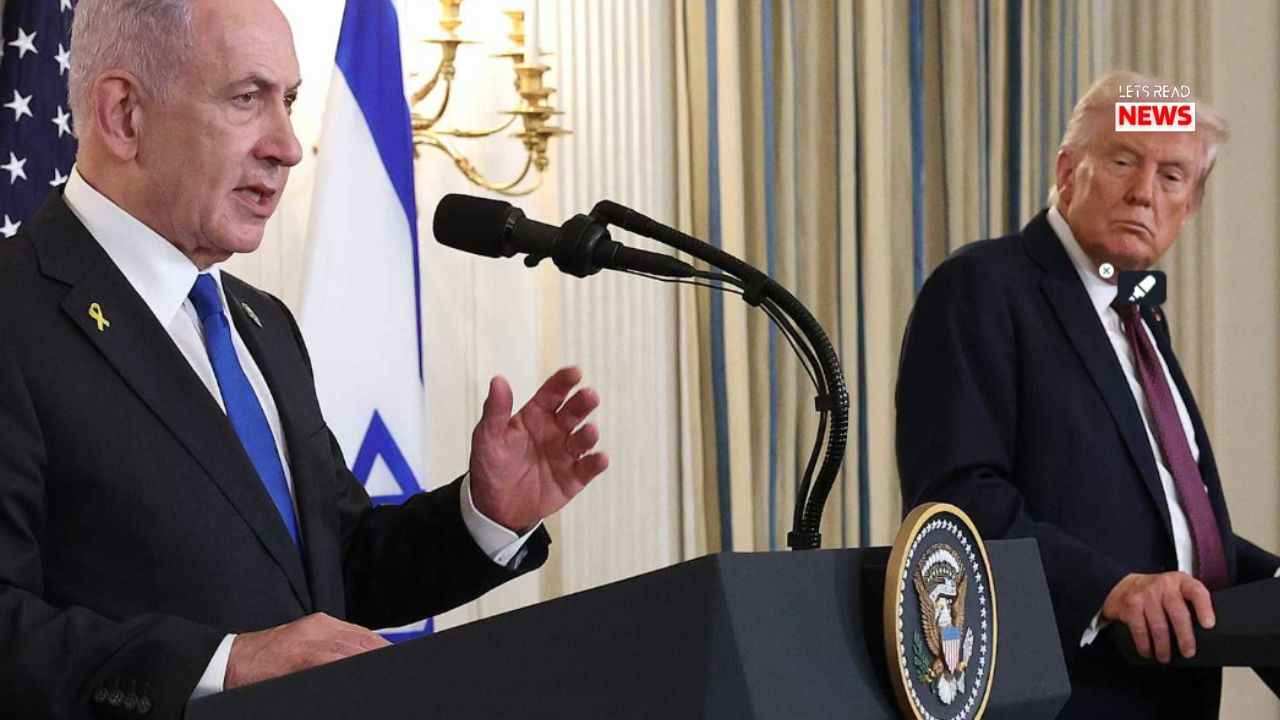
Netanyahu Vows to Defy Trump: “I Will Tell Them No” — White House Showdown Tuesday
Israeli PM Benjamin Netanyahu publicly rejects President Trump’s demand to withdraw troops from Syria, Lebanon, and Gaza. What happens next at Tuesday’s White House meeting?
The Unthinkable Split
In a stunning rebuke that no geopolitical analyst saw coming, Israeli Prime Minister Benjamin Netanyahu has drawn a line in the sand — directly at the feet of his closest ally.
“I will tell them no.”
Those four words, delivered to his own cabinet before boarding a flight to Washington, have sent shockwaves through diplomatic circles worldwide. Netanyahu isn’t just disagreeing with the White House. He’s openly defying President Donald Trump’s explicit demand to pull Israeli forces out of southern Syria, southern Lebanon, and Gaza.
The stage is now set for one of the most explosive U.S.-Israeli confrontations in modern history. And it happens Tuesday at the White House.
What Trump Demanded — And Why It Matters
According to exclusive reporting from Axios, President Trump called Netanyahu in mid-July with a clear message: start withdrawing.
“They don’t want you there. You should redeploy,” Trump reportedly said, referring to Israeli forces operating in southern Syria and Lebanon. The warning was unambiguous — Israel’s continued military presence is “fueling tensions” across an already volatile region.
Washington wants withdrawals on three fronts simultaneously:
- Southern Syria — where Israeli troops have conducted escalating raids since Assad’s fall in December 2024
- Southern Lebanon — where the IDF maintains positions beyond the disengagement zone
- Gaza — where Israeli forces remain embedded amid ongoing operations
For Trump, this isn’t diplomatic theater. It’s a strategic pivot. For Netanyahu, it’s a red line he refuses to cross.
“I Intend to Stand on My Own Two Feet”
Netanyahu’s defiance wasn’t whispered through backchannels. It was broadcast.
According to Israel’s Channel 13, the Prime Minister informed his ministers that Washington expects “a series of withdrawals” across all three theaters. His response? Full-throated rejection.
“I intend to stand on my own two feet and resist,” Netanyahu declared. Then came the kicker: “I will tell them no.”
This isn’t negotiation. This is a public dare — issued hours before Netanyahu’s plane touched down in Washington for an official visit that now feels less like diplomacy and more like a boxing weigh-in.
The Military Reality on the Ground
While diplomats prepare for Tuesday’s showdown, Israeli boots are still moving.
Early Monday, IDF forces launched fresh incursions into southern Syria. Syria’s state news agency SANA reported troops entering Taranjah village in northern Quneitra, raiding homes and arresting at least one civilian. The Anadolu Agency confirmed parallel operations in western Daraa.
This pattern of escalation has intensified dramatically since December 2024, when the Assad regime collapsed and Israel moved to establish what it calls a “security buffer” beyond the occupied Golan Heights.
But here’s the problem: that buffer violates the 1974 Disengagement of Forces Agreement — a fact both Syrian authorities and international observers have repeatedly highlighted.
Amnesty International has gone further, calling for war crimes investigations into Israel’s destruction of civilian homes in Quneitra. The demolitions, the organization says, were carried out “without absolute necessity” — a direct violation of international humanitarian law.
Netanyahu’s refusal to withdraw doesn’t just defy Trump. It deepens Israel’s legal and diplomatic isolation on the world stage.
Why Netanyahu Is Gambling Everything
So why would a Prime Minister facing immense domestic pressure deliberately antagonize the most pro-Israel U.S. president in memory?
The answer lies in Netanyahu’s political survival calculus.
Withdrawing from Gaza would be interpreted by his far-right coalition partners as surrender. Pulling back from Syria and Lebanon would expose him to accusations of ceding security gains won at the cost of Israeli soldiers’ lives. And appearing weak before Trump — a president who respects strength above all — could collapse his negotiating position entirely.
Netanyahu isn’t just fighting Trump. He’s fighting for his political life.
By declaring his defiance before the meeting, he’s boxing himself in — and daring Trump to escalate beyond words. It’s high-stakes poker played with live ammunition.
What Happens Tuesday at the White House?
This isn’t Netanyahu’s first Oval Office rodeo. But it may be his most dangerous.
Politico reports that the Prime Minister is walking into “a White House increasingly at odds” with his government. The Trump administration has made its position clear: Israeli troops need to redeploy. Now.
But Trump faces his own dilemma. Publicly humiliating Netanyahu risks:
- Alienating his evangelical base, which views Israel through an apocalyptic lens
- Emboldening Iran and its proxies across the region
- Creating a perception of American weakness if Israel simply ignores the demand
The options on the table range from diplomatic scolding to concrete pressure — conditional aid, delayed weapons transfers, or public condemnation at the UN.
Whether Trump pulls any of those levers depends on one question: Who blinks first?
The Bigger Picture: A Alliance Under Strain
For decades, the U.S.-Israel relationship was described as “unbreakable.” Tuesday’s meeting may test whether that was ever true — or merely convenient.
Netanyahu’s calculation is clear: Israel’s security interests, as he defines them, override American strategic preferences. Trump’s calculation is equally clear: endless military entanglement in the Middle East is not in America’s interest, and Israel’s presence in Syria is making things worse, not better.
Two leaders. Two visions. One room.
The outcome could reshape the Middle East for a generation.
What’s Next: 3 Scenarios to Watch
Scenario 1: The Face-Saving Compromise Trump and Netanyahu emerge with vague language about “phased withdrawals” and “security coordination.” Both claim victory. Nothing actually changes on the ground.
Scenario 2: The Public Rupture Trump goes hard. Aid is threatened. Statements are issued. Netanyahu returns to Israel claiming he stood up to American pressure. The alliance cools but doesn’t collapse.
Scenario 3: The Unthinkable Netanyahu agrees to limited withdrawals in exchange for something bigger — a green light on Iran, expanded settlement recognition, or a security guarantee that locks in Israeli gains permanently.
Whatever happens, one thing is certain: the world will be watching.
Final Analysis: Why This Matters to You
This isn’t just a diplomatic spat between two old allies. This is a stress test for the entire post-October 7th order.
If Netanyahu can defy Trump and survive, every U.S. ally gets the message: American demands are optional. If Trump breaks Netanyahu, every Israeli leader gets the message: no Prime Minister is bigger than the alliance.
Tuesday’s White House meeting isn’t just about troop withdrawals. It’s about who controls the future of the Middle East — and whether “no” is still a word allies can say to the world’s superpower.
The answer comes Tuesday.
Stay updated on this developing story. Bookmark this page for real-time analysis as the White House meeting unfolds.
Related Articles:
- Your $4 Prescription Could Cost $12 by 2029 — Here’s Why Trump’s 200% Generic Drug Tariff Hits Your Wallet First
- Trump’s Strait of Hormuz Proposal: Strategic Power Play or Dangerous Escalation?




4 Comments