Your $4 Prescription Could Cost $12 by 2029 — Here’s Why Trump’s 200% Generic Drug Tariff Hits Your Wallet First
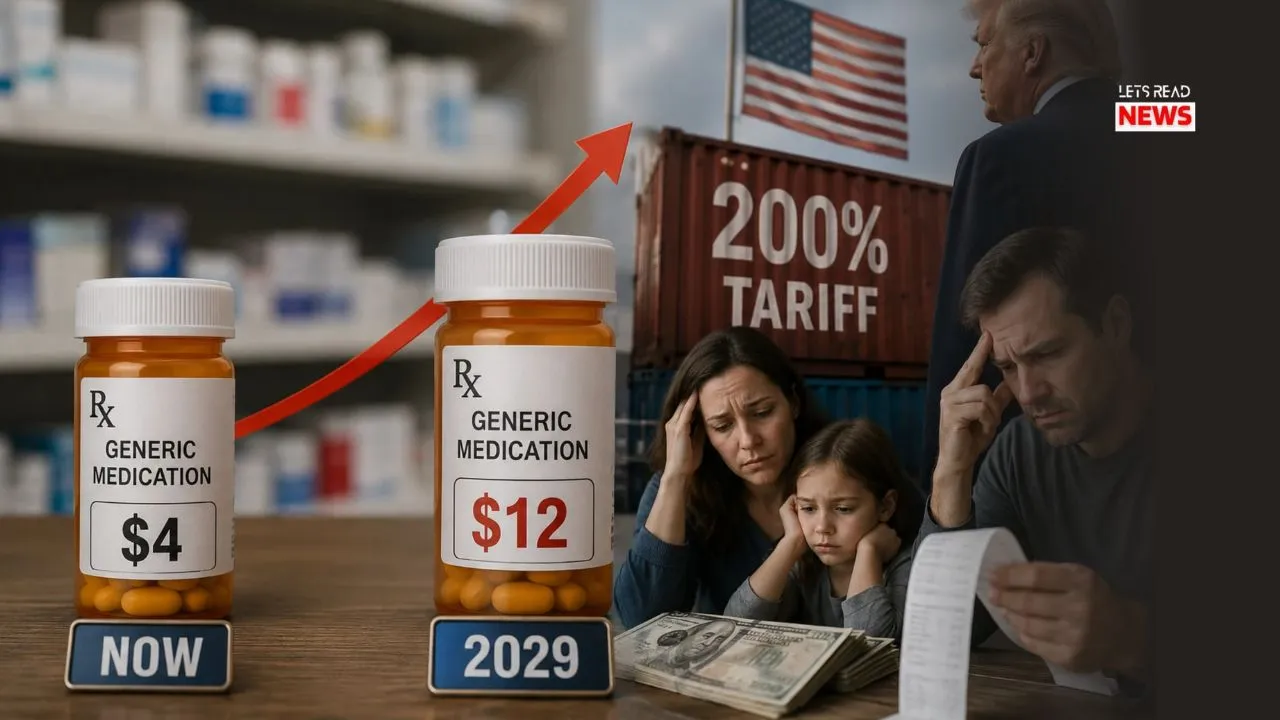
The pharmacy label won’t say “tariff surcharge.” But your receipt will.
President Trump announced Tuesday that generic drugs imported into the U.S. will face tariffs escalating to 200% by 2029 — a move designed to force drug manufacturing back to American soil. The announcement sent Indian pharmaceutical stocks tumbling Wednesday, but the real story isn’t on Wall Street. It’s in your medicine cabinet.
India supplies roughly 65% of all generic drugs sold in the United States. We’re not talking about obscure medications. We’re talking about the antibiotics you get for strep throat, the blood pressure pills millions of Americans take daily, and the insulin alternatives that keep diabetics alive.
A 200% tariff doesn’t mean pharmacies add a line item labeled “Trump tariff.” It means the cheapest source of your medication gets priced out — and there is no ready American replacement.
The Timeline
Here’s how the tariff actually phases in, based on Trump’s Truth Social post:
Table
| Date | Tariff Rate | What It Means |
|---|---|---|
| Now – July 31, 2026 | 0% | Current rules unchanged |
| Aug 1, 2026 – July 31, 2028 | 0% (2-year grace period) | Stock up if you can |
| Aug 1, 2028 – July 31, 2029 | 100% | Prices likely double for affected generics |
| Aug 1, 2029 onward | 200% | Indian generics become economically impossible at current prices |
Trump called the escalation “a penalty” for companies that don’t build U.S. factories during the grace period. The message is clear: manufacture in America, or pay until you do.
The catch? Building an FDA-approved pharmaceutical plant takes 4–6 years and $500 million to $1 billion. The two-year grace period isn’t enough time to break ground, let alone produce a single pill.
Why Generic Drugs Can’t Just “Come Home”
American pharmaceutical manufacturing didn’t move to India by accident. It left because making generic drugs in the U.S. costs 30–40% more — mostly due to labor, environmental compliance, and raw material supply chains that migrated overseas decades ago.
India isn’t just cheap labor. It’s where the entire generic ecosystem lives:
- Active pharmaceutical ingredients (APIs): The chemical building blocks of your pills
- FDA-approved facilities: Over 660 Indian plants are cleared to export to the U.S.
- Scale: India produces roughly 20% of global generic supply by volume
You can’t move that ecosystem in two years. You can’t move it in ten without massive government subsidy — which this tariff announcement did not include.
What Actually Happens to Your Prescriptions
Let’s be specific about what “200% tariff” means at the pharmacy counter.
Scenario 1: The cost gets passed to you
- Your $4 generic antibiotic becomes $10–$12
- Your $30 blood pressure medication becomes $75–$90
- Medicare and Medicaid absorb some of this — until they don’t, and premiums rise
Scenario 2: Shortages
- Indian manufacturers stop shipping low-margin drugs to the U.S.
- Pharmacies run out of common generics
- You get switched to branded alternatives at 5–10x the price, or wait
Scenario 3: The “Branded Loophole”
- Trump’s tariff applies only to generic drugs
- Patented, branded, and “innovative” medicines stay at the existing 100% Section 232 tariff
- This creates a perverse incentive: why make cheap generics in America when branded drugs face lower relative penalties?
The Real Question: Who Builds the Factory?
Trump’s plan assumes pharmaceutical companies will rush to build U.S. plants. Here’s why that’s unlikely without additional policy:
Table
| Barrier | Reality |
|---|---|
| Time | 4–6 years minimum for FDA approval and construction |
| Money | $500M–$1B per facility; Indian companies operate on thin margins |
| Labor | U.S. lacks trained pharmaceutical manufacturing workforce at scale |
| Suppliers | Most chemical precursors come from China and India |
| Incentives | No tax breaks or subsidies announced alongside tariffs |
Indian pharma companies like Cipla, Sun Pharma, and Dr. Reddy’s saw their stocks drop 1–4% Wednesday. But stock prices reflect investor panic, not operational reality. These companies can’t afford to build American factories quickly — and American companies haven’t shown interest in replacing India’s generic dominance.
What You Should Actually Do
If you take daily generic medications:
- Talk to your doctor now about 90-day prescriptions before 2028
- Ask your pharmacist which of your drugs are Indian-sourced generics
- Watch for formulary changes — insurance plans may drop covered generics if prices spike
- Consider mail-order pharmacies that may buffer price shocks longer than retail chains
If you’re on Medicare:
- Generic price spikes hit the donut hole faster
- Watch for 2028–2029 plan changes that restrict generic coverage
- The Inflation Reduction Act’s drug price negotiations cover branded drugs, not generics — leaving you exposed
The Bottom Line
This isn’t a 2029 problem. Insurance companies and pharmacy benefit managers start pricing in tariff risk now. Formulary decisions for 2028 plans begin in 2027. The “grace period” is when the damage to your wallet gets calculated — not when it gets prevented.
Trump’s tariff is designed to create American manufacturing jobs. But without subsidies, workforce development, and a realistic timeline, the more likely outcome is more expensive generics, periodic shortages, and a pharmaceutical supply chain that remains dependent on India — just at higher cost to you.
The pharmacy label won’t say “tariff surcharge.” But by 2029, you’ll know exactly what you’re paying for.
Last updated: July 22, 2026. This article will be updated as implementation details and company responses emerge.
FAQ
Do branded drugs face the 200% tariff?
No. Patented and branded medicines remain at the existing 100% Section 232 tariff. Only generic drugs escalate to 200%.
When do the new tariffs start?
August 1, 2026, but at 0% for two years. The 100% rate begins August 1, 2028. The 200% rate begins August 1, 2029.
Can I stockpile my prescriptions?
Some doctors will write 90-day supplies. Controlled substances have legal limits. Ask your prescriber about your specific medications.
Will American companies replace Indian generic manufacturing?
Not quickly. The U.S. lacks the facilities, workforce, and supplier networks. Realistic timelines are 5–10 years with major government investment.
Does this affect all generics?
The policy applies to all generic drugs imported into the U.S. India supplies 65% of them, but the tariff applies regardless of country of origin.
Recommended for you: