President Donald Trump’s latest statement that the United States will “probably” take over the Strait of Hormuz has sent shockwaves through global politics, financial markets, and the energy sector. Coming amid escalating military conflict with Iran, the remarks represent more than campaign-style rhetoric—they suggest a dramatic shift in how Washington may view one of the world’s most strategically important waterways.
Why the Strait of Hormuz Matters
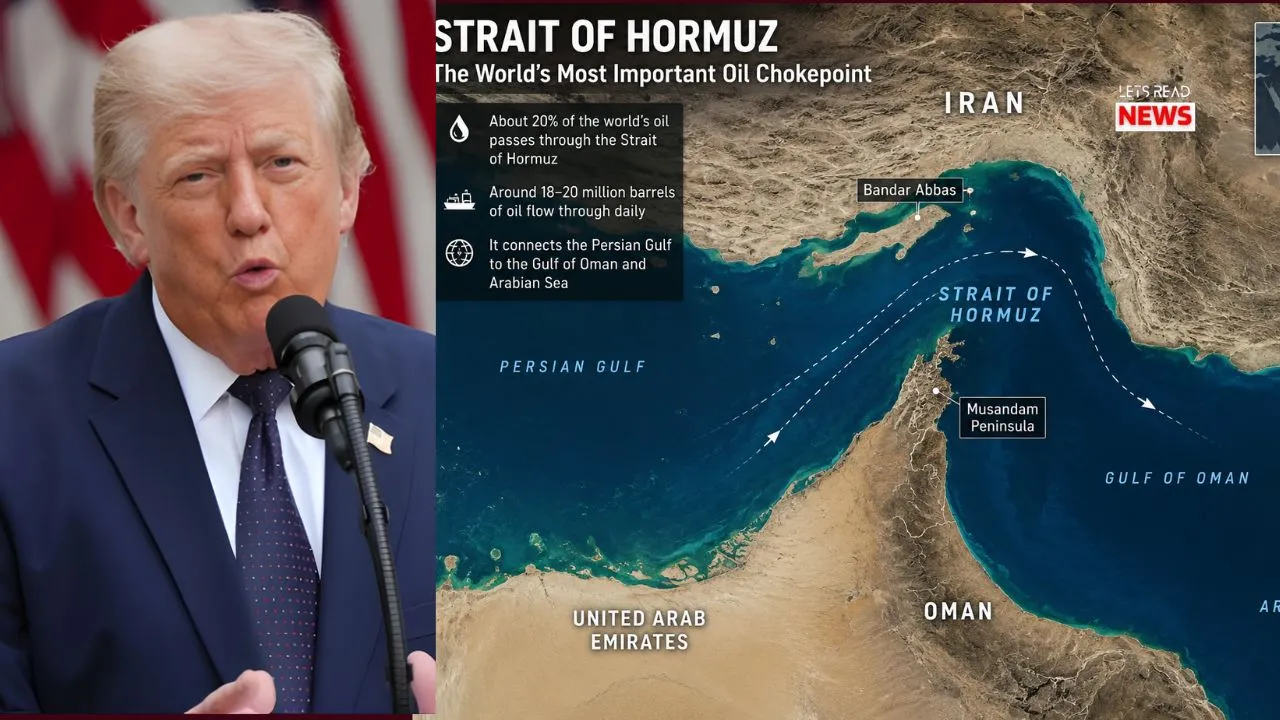
The Strait of Hormuz is often described as the world’s most important energy chokepoint. Around 20% of global oil shipments and significant volumes of liquefied natural gas pass through this narrow passage connecting the Persian Gulf with the Arabian Sea.
Any disruption immediately affects global energy prices, shipping insurance, inflation, and economic stability.
Trump’s New Position
Trump’s latest comments indicate a significant evolution in his stance.
Only weeks ago, he described the strait as remaining “toll-free.” Now, following renewed conflict with Iran, he argues that America has protected international shipping for decades without adequate compensation.
His argument is straightforward:
- The U.S. Navy secures the shipping lanes.
- Many countries benefit from that protection.
- Those countries should pay for America’s security role.
- The United States could ultimately administer or oversee the waterway itself.
This reflects a broader “America First” philosophy in which allies are expected to contribute more financially to U.S. military commitments.
Is a U.S. Takeover Realistic?
Legally and diplomatically, such a move would face enormous obstacles.
The Strait of Hormuz is bordered by Iran and Oman. International maritime law protects freedom of navigation through international straits, making unilateral control by any single country highly controversial.
Even if the U.S. dramatically increased its naval presence, declaring operational control over the strait would likely trigger intense diplomatic opposition and could further escalate military tensions.
Iran’s Perspective
Iran has long viewed the Strait of Hormuz as one of its strongest strategic assets.
Whenever pressure from sanctions or military action increases, Tehran has repeatedly threatened to disrupt shipping through the strait. Such threats are intended to demonstrate that any conflict with Iran carries global economic consequences.
Trump’s latest remarks are therefore likely to be interpreted in Tehran as a direct challenge to Iranian influence in the region.
Economic Consequences
Markets are already reacting.
With shipping volumes sharply reduced and security risks increasing, energy analysts expect oil prices to remain volatile. Higher crude prices could feed into:
- Rising fuel costs
- Increased transportation expenses
- Higher inflation worldwide
- Greater uncertainty for financial markets
Even countries far removed from the Middle East would likely feel the economic impact through higher import costs and slower growth.
The Bigger Geopolitical Picture
Trump’s comments also reflect a changing international order.
Rather than acting solely as the guarantor of global security, the United States appears increasingly willing to demand direct economic compensation for providing military protection.
This approach could reshape alliances and encourage other major powers—including China and Russia—to expand their own influence over strategic trade routes.
What Happens Next?
Whether Trump’s remarks become official policy remains uncertain. Much depends on developments in the U.S.–Iran conflict, international diplomacy, and the willingness of allies to support Washington’s position.
However, one thing is clear: the Strait of Hormuz has once again become the center of global geopolitics.
The decisions made in the coming weeks could influence oil markets, military strategy, and international relations for years to come.
Read more:
Giorgia Meloni’s Iran Comments Spark Online Comparisons With Donald Trump: Here’s Why They’re Going Viral