
Stallone Told Trump “No” on Hollywood Role. Then He Saw His Name on TV
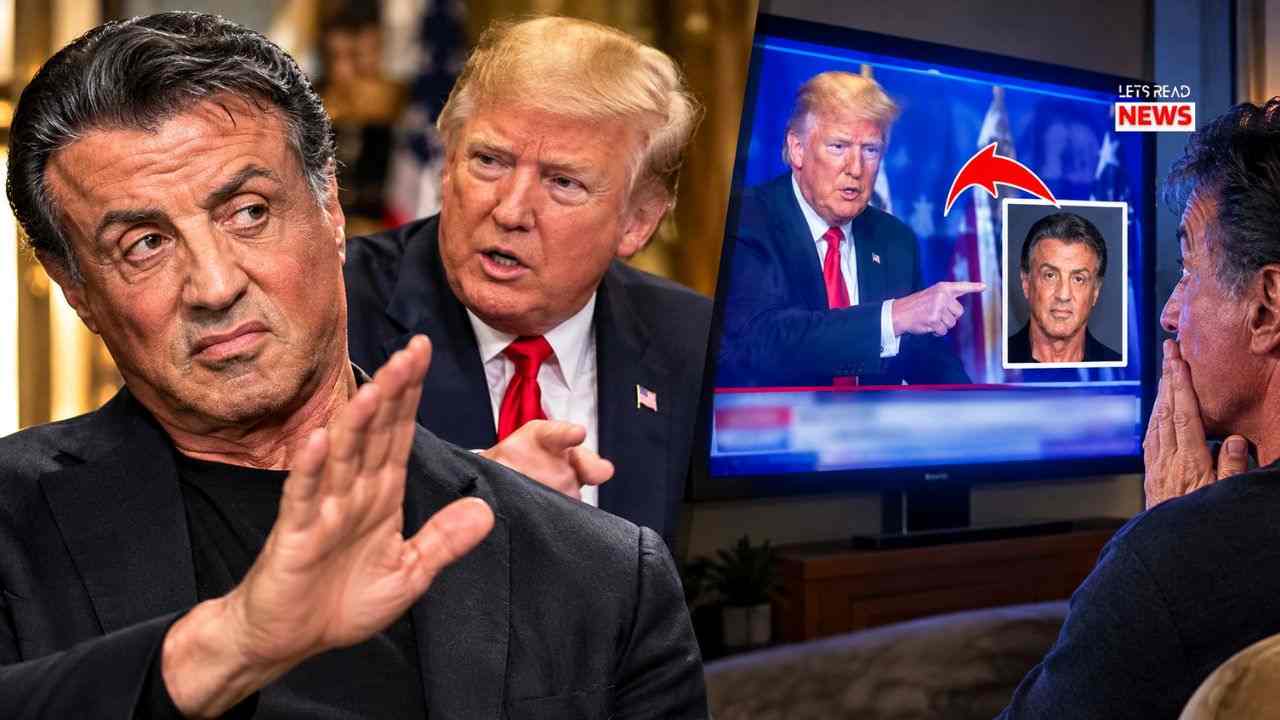
Sylvester Stallone says he told Donald Trump that serving as a special Hollywood ambassador would not work. Then, according to the actor, he discovered on television that Trump had announced him for the job anyway.
Sylvester Stallone has revealed that he never formally agreed to become one of Donald Trump’s special ambassadors to Hollywood, despite being publicly named for the position alongside actors Mel Gibson and Jon Voight.
The revelation comes nearly two years after Trump announced the three actors as special envoys tasked with helping revive the American film and television industry. Stallone now says he had already told Trump that he did not believe the arrangement would work.
The unusual episode also comes at a moment when Trump’s administration and Hollywood figures are again pushing a much more concrete policy: federal financial incentives designed to encourage film and television production in the United States.
That makes Stallone’s story more than a celebrity anecdote. It illustrates the difficulty of trying to change an industry built around powerful studios, producers, tax incentives and production locations.
Stallone says he learned about his appointment from television
According to Stallone’s interview with The Times, he met with Trump about the proposed role but ultimately rejected it.
His response, he said, was essentially: thank you, but no.
Stallone said he later discovered that Trump had publicly announced him as one of the special ambassadors while he was watching television.
The actor recalled being surprised when he heard the announcement naming him alongside Gibson and Voight. He said that if he had been asked at the beginning whether he wanted the position, he would have said it was not possible.
The episode raises an unusual question about what exactly the “special ambassador” position was supposed to accomplish.
Why Stallone thought the job would not work
Stallone’s objection was not simply that he did not want the title.
He questioned whether actors could realistically influence an industry controlled by major corporations and powerful studio executives.
He described Hollywood as resembling a collection of “feudal states” and argued that outsiders could not simply walk into the major studios and tell them how to operate.
His point was essentially about who actually controls Hollywood.
The industry is not governed by a single organization. Film and television production involves studios, streaming companies, producers, financiers, unions, distributors, state governments and international production markets.
That makes Hollywood considerably more complicated than a company where one executive can simply change the direction of the entire organization.
What Trump originally wanted from the ambassadors
Trump announced Stallone, Gibson and Voight as special envoys in January 2025.
The administration presented the appointments as part of an effort to help restore U.S. film and television production, which Trump argued had shifted too much business overseas. The three actors were described as people who could serve as his “eyes and ears” in Hollywood.
The roles were unusual because they were not conventional diplomatic ambassadorships.
Instead, they were intended as a way of bringing prominent Hollywood figures into an effort to influence the industry’s future.
Stallone’s new account suggests that at least one of the three did not see the proposed role as workable.
Jon Voight took a different approach
While Stallone says he stepped away from the role, Jon Voight has remained involved in efforts to reshape U.S. film-production policy.
Voight has been advocating for a federal production incentive intended to make the United States more competitive with countries that offer financial incentives to attract film and television productions.
That issue has now moved beyond Hollywood conversations and into Washington.
On August 31, Trump called on Congress to create a federal production incentive for the entertainment industry and said Republicans and Democrats should work together on legislation. Reuters reported that Trump said the measure should be designed to support movie, television and entertainment jobs in the United States.
So while the original ambassador arrangement has generated a surprising celebrity story, the policy question behind it remains active.
Why Hollywood production moved overseas
The underlying problem is economic rather than simply cultural.
Film and television productions can cost millions of dollars, and producers can choose between locations based on factors such as:
- tax incentives
- labor costs
- studio facilities
- government subsidies
- exchange rates
- infrastructure
- skilled workers
- production rules
U.S. states compete with one another using film incentives, while countries such as Canada, the United Kingdom, Australia and others have developed programs designed to attract international productions.
That means a production that could technically be filmed in California might instead be financially attractive to producers somewhere else.
A federal incentive would therefore attempt to change part of that calculation.
But the size and design of any eventual incentive would matter.
A tax credit does not automatically guarantee that a production will return to the United States, and the cost to taxpayers would also become part of the debate.
Also Read: Was This a Compliment or a Jab? Trump’s Stallone Comment Explodes Online
Congress is already considering film-production incentives
The broader policy discussion is not starting from zero.
Congressional proposals have already been introduced concerning federal treatment of film and television production.
For example, H.R. 3844, introduced in the 119th Congress, proposed changes involving bonus depreciation for qualified film and television productions and minimum in-state spending requirements.
Another 2026 bill, H.R. 7007, proposed extending and modifying federal tax treatment for qualified film and television productions.
These proposals are examples of the broader legislative debate; they should not be confused with a final federal production incentive that Congress has enacted.
The bigger question: Can Washington actually bring Hollywood back?
That remains unresolved.
A federal incentive could make U.S. production more financially competitive with some foreign locations.
But production decisions involve much more than taxes.
Studios also consider:
Where can a production be made most efficiently?
Where are experienced crews available?
Where are sound stages and other facilities available?
What government incentives are available?
What does the overall production budget look like?
And perhaps most importantly:
Will the incentive be large and predictable enough to change long-term investment decisions?
Those questions would remain even if Congress passes a federal incentive.
Stallone’s unexpected role in the debate
That is what makes Stallone’s revelation particularly interesting.
Trump’s original plan placed three famous actors at the center of an effort to influence Hollywood.
But Stallone now says he believed the role itself could not accomplish what it was supposed to do.
Meanwhile, Voight has continued advocating for a specific policy mechanism: federal incentives for domestic production.
The contrast is striking.
One approach relies on influential Hollywood figures trying to persuade an industry.
The other focuses on changing the economic incentives that influence where productions are made.
Whether either approach succeeds will depend on decisions made by studios, producers, workers, state governments and Congress—not simply by celebrity ambassadors.
What happens next?
The immediate question is whether Congress turns Trump’s call for a federal production incentive into legislation that can pass both chambers and become law.
If that happens, the details will matter enormously.
The percentage of the incentive, which productions qualify, spending requirements, geographic rules and duration could all affect how attractive the program becomes to producers.
For now, Stallone’s story provides an unexpected reminder that Hollywood cannot be changed simply by giving famous people a title.
The industry is built around a complicated network of financial incentives and corporate decisions.
And that may be why Stallone, after being offered a seat at the table, concluded that the proposed ambassador role was not the way to change it.
Recommended for you:
- Netanyahu Rejects Trump’s Troop Withdrawal Demand: White House Showdown Looms
- Giorgia Meloni’s Iran Comments Spark Online Comparisons With Donald Trump: Here’s Why They’re Going Viral
- Analysis: Grok’s “Deepfake” Blunder on Netanyahu’s Coffee Video – When AI Becomes the Fuel for the Fire It Was Meant to Extinguish

2 Comments