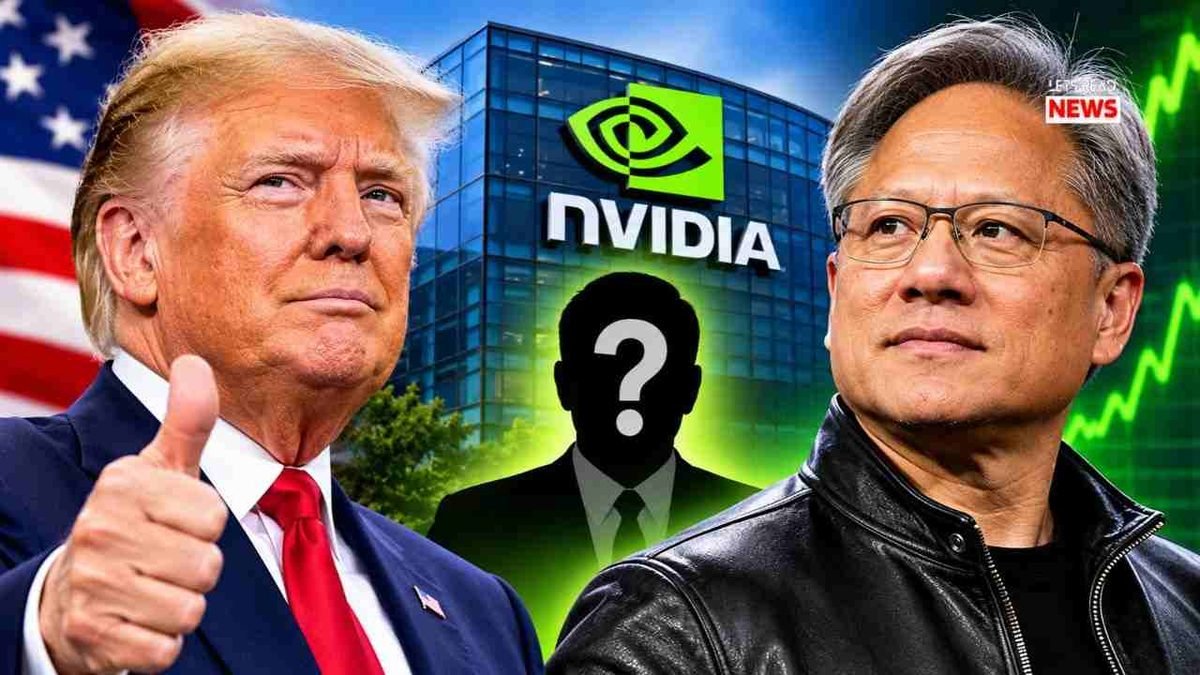
President Donald Trump says he would welcome Jensen Huang back as Nvidia’s CEO, adding momentum to a growing campaign for his reinstatement. But the final decision rests with Nvidia’s board, which must weigh leadership stability, corporate governance and national security concerns.
President Donald Trump has publicly supported the possibility of Jensen Huang returning as chief executive of Nvidia, adding a new political dimension to an already extraordinary leadership crisis at the world’s most influential AI chipmaker.
Speaking to reporters at the White House on Monday, November 16, before departing for Asia, Trump said he “would not mind” seeing Huang return to the position he held for more than three decades.
The president also suggested that Huang had learned an important lesson from the controversy surrounding his departure.
“I think he learned a big lesson,” Trump told reporters, while describing the possibility of Huang’s reinstatement as “not a bad idea.”
The comments come just days after Nvidia announced that Huang had resigned as CEO and left the company’s board. His departure followed reports of extramarital relationships, including one involving Alice Huang, a former executive at Singapore-based Megaspeed International whom U.S. officials reportedly suspect of having connections to Chinese intelligence.
However, the espionage allegations remain unproven. U.S. Attorney General Todd Blanche has confirmed that the Justice Department has not reached a conclusion about whether Alice Huang was working for the Chinese government.
Trump’s intervention has intensified an important question for the technology industry: Should Nvidia bring back the executive who built its extraordinary AI business, or use this moment to establish a new leadership structure?
Why Trump Wants Jensen Huang Back
Huang is not an ordinary technology executive.
He co-founded Nvidia in 1993 and spent more than three decades transforming the company from a graphics-chip manufacturer into a central supplier of the computing infrastructure powering artificial intelligence.
Under his leadership, Nvidia became one of the most important companies in the global technology industry. Its graphics processing units, commonly known as GPUs, are widely used to train and operate advanced AI systems.
That position has made Nvidia strategically important to the United States, particularly as Washington competes with China for leadership in artificial intelligence.
Trump’s comments suggest that he does not believe Huang’s personal controversy should automatically end his career at the company.
The president also rejected the suggestion that Huang had necessarily endangered American national security.
He pointed to existing restrictions preventing Nvidia from selling its most advanced Blackwell AI chips to China. Trump said he might raise the issue of the Chinese businesswoman with Chinese President Xi Jinping during his Asia trip.
However, his position is more complicated than a simple endorsement.
Trump criticized Huang’s personal conduct, saying the former CEO should not have behaved as he reportedly did. At the same time, he questioned whether Alice Huang was actually a spy.
The president also repeated his earlier suggestion that former Apple CEO Tim Cook could be considered for Nvidia’s top position.
This leaves two very different possibilities on the table: restoring the company’s longtime leader or bringing in an executive from outside the organization.
A Growing Campaign to Bring Huang Back
Trump is not alone in supporting Huang’s return.
Several prominent technology figures and business leaders have joined a growing campaign asking Nvidia to reconsider his departure.
Elon Musk has publicly supported the effort, while Epic Games CEO Tim Sweeney has also backed calls for Huang’s reinstatement.
Investors Brad Gerstner and Gavin Baker have reportedly encouraged Nvidia’s board to keep the possibility of his return open.
Supporters argue that removing an executive with Huang’s experience could create unnecessary uncertainty at a time when Nvidia occupies a critical position in the global AI industry.
The campaign has also attracted attention among Nvidia employees, investors and people who believe the company should distinguish between allegations about personal conduct and its ability to deliver long-term business results.
According to Financial Times reporting, people close to Huang have discussed the possibility of a comeback. One of his allies is reportedly organizing a group of Silicon Valley executives to build support for his return.
But public support does not automatically translate into a boardroom decision.
Nvidia’s directors must independently determine whether Huang should return and whether doing so would serve the company’s long-term interests.
Why Some Officials Want a New Leader
Not everyone in Washington believes bringing Huang back is the right decision.
Treasury Secretary Scott Bessent has reportedly argued that Nvidia needs a significant leadership change and should consider an executive from outside the company.
His position reflects concerns that the controversy extends beyond Huang’s personal life.
The relationship reportedly raised questions about access to sensitive business information, the security of technology partnerships and the risks associated with China’s growing interest in advanced AI computing.
These questions are particularly important because Nvidia operates at the center of the U.S.-China technology competition.
American restrictions on advanced semiconductor exports are designed to limit China’s access to computing power that could support military applications and advanced artificial intelligence development.
Nvidia has a significant commercial interest in the Chinese market, while Washington has a national security interest in controlling access to its most advanced technologies.
That creates a difficult balance for any Nvidia CEO.
A new leader would have to manage relationships with the U.S. government, international customers, technology partners and investors while maintaining Nvidia’s competitive position.
The board has reportedly approached Arm Holdings CEO Rene Haas about the position. However, Nvidia has said speculation about individual candidates is premature.
Who Is Running Nvidia Now?
Following Huang’s departure, Nvidia appointed its longtime chief financial officer, Colette Kress, as interim CEO.
Kress joined Nvidia in 2013 and has played an important role in managing the company’s financial operations during its rapid expansion.
She will continue serving as CFO while temporarily leading the company.
Nvidia’s board has announced that it will consider both internal and external candidates when selecting a permanent chief executive.
This means the company has not publicly committed to bringing Huang back or appointing a particular replacement.
The leadership transition also creates an important test for Nvidia: Can its existing management team maintain confidence among investors, customers and employees while the board searches for a permanent leader?
For a company whose products are deeply connected to the global AI industry, leadership uncertainty is not just an internal corporate matter.
Why Nvidia’s Leadership Matters to the United States
The debate over Huang’s future has implications beyond Silicon Valley.
Nvidia’s chips are essential components in the infrastructure used by major technology companies, cloud providers, research institutions and AI developers.
Its products help power AI models, autonomous technology, scientific research and other advanced computing applications.
That makes the company’s leadership particularly important at a time when governments increasingly view semiconductors as strategic assets.
The United States wants to maintain its advantage in advanced computing while preventing sensitive technologies from strengthening China’s military and technological capabilities.
Nvidia, meanwhile, must protect its global business and remain competitive against other chipmakers.
If Huang returns, he could bring back the experience and industry relationships that helped Nvidia become a dominant force in AI.
However, the board would also need to consider whether his return could create additional questions about corporate governance, security oversight and the company’s relationship with Washington.
If Nvidia chooses a new CEO, the company could signal that it wants a fresh leadership structure and a different approach to managing its most sensitive relationships.
Neither decision is without risk.
What Happens Next?
The immediate decision belongs to Nvidia’s board, not the White House.
Trump’s support could increase pressure on directors, but the president cannot independently reinstate Huang as the company’s chief executive.
The board must complete its review, evaluate potential candidates and decide what leadership arrangement best protects Nvidia’s future.
Several developments will be worth watching:
- The board’s decision: Whether directors consider Huang’s return or move forward with an external candidate.
- The investigation: Whether U.S. authorities establish any connection between Alice Huang and Chinese intelligence.
- Washington’s position: Whether the controversy changes the government’s approach to Nvidia’s leadership or technology partnerships.
- Investor confidence: Whether the company can maintain confidence in its business strategy during the transition.
Nvidia’s next earnings report will also provide investors with an opportunity to assess the company’s financial performance during this period of uncertainty.
The Bigger Question: Can Nvidia Separate Its Future From One Man?
Jensen Huang built Nvidia into a technology powerhouse, and his departure has demonstrated just how closely the company’s identity is connected to its longtime leader.
That explains why some executives and investors want him back.
But Nvidia is now much larger than the company Huang founded in 1993. It has become a critical part of the global AI economy, with responsibilities and risks that extend well beyond the decisions of one executive.
Trump’s support has made a possible comeback more politically visible. Yet the central decision remains a corporate one.
The question Nvidia’s board must answer is not simply whether Huang deserves another opportunity.
It is whether bringing him back would be the best decision for the company, its shareholders, its employees and the technology infrastructure that increasingly shapes the global economy.
For now, Huang’s return remains a possibility, not a confirmed decision. And until Nvidia’s board makes its choice, the future of one of America’s most important technology companies remains uncertain.
Also Read: