
Trump Says U.S. Will Defend Greenland Under Permanent Security Deal With Denmark. What Changes Now?
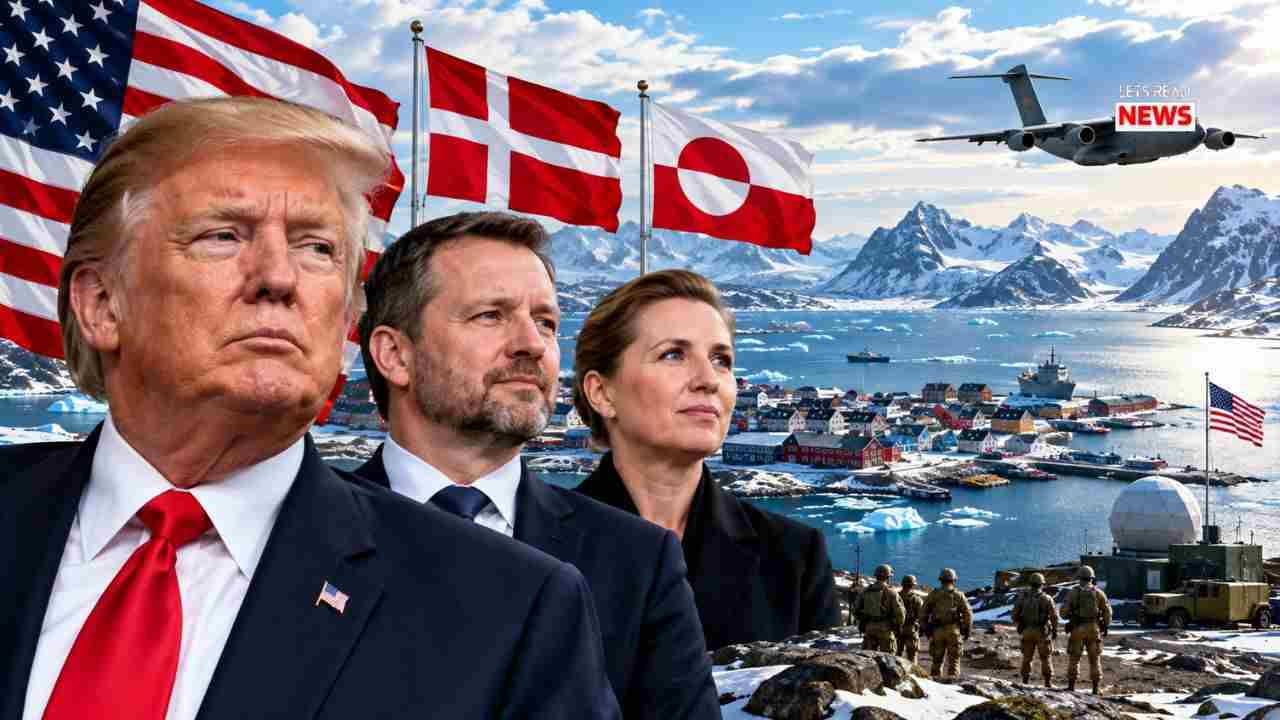
President Donald Trump says the United States has secured a permanent security agreement with Denmark and Greenland. The proposed arrangement could expand America’s military role in the Arctic without transferring sovereignty over the strategically important island.
The United States has spent months pursuing greater control over Greenland. Now, President Donald Trump says Washington has reached a security agreement with Denmark and Greenland that would give the United States permanent responsibility for protecting the Arctic territory.
The announcement marks a significant change in the dispute surrounding Greenland. Trump previously pushed for the United States to acquire the island, citing national security concerns. The new arrangement, as described by Trump and reported by international news organizations, focuses instead on military cooperation, expanded U.S. access, and preventing rival powers from establishing a strategic foothold there.
But the details remain unclear. Denmark and Greenland have emphasized that the agreement does not transfer sovereignty, and the proposed deal still faces the required political procedures.
So what would this agreement actually change?
Greenland is not just an island covered in ice
Greenland is the world’s largest island and occupies a strategically important position between North America and Europe.
Its location places it near the Arctic approaches to North America and the North Atlantic. That makes the territory relevant to early-warning systems, military surveillance, shipping routes, and the defense of the United States and its European allies.
The United States already operates Pituffik Space Base in northwest Greenland. The installation supports missile-warning and space-surveillance missions and is part of the wider defense architecture protecting North America.
Greenland also sits in a region where Russia, the United States, Canada, and European countries have important security interests.
As the Arctic becomes more accessible because of changing ice conditions, governments are paying closer attention to military activity, shipping, critical infrastructure, and the possibility of increased competition for strategic resources.
For Washington, Greenland’s location makes it difficult to treat the island as an ordinary overseas territory.
What did Trump announce?
Trump said the United States, Denmark, and Greenland had reached an agreement that would give Washington permanent control over Greenland’s security needs.
He also said the arrangement would allow the United States to strengthen its military presence and prevent adversarial countries from establishing bases, deploying military forces, or making sensitive investments on the island without American approval.
The announcement followed negotiations aimed at strengthening U.S. security cooperation in Greenland.
However, Trump’s description of the arrangement should not be confused with a transfer of ownership. Reports from Reuters and the Associated Press say Denmark and Greenland have reaffirmed that Greenland’s sovereignty remains unchanged.
The precise legal terms—including the extent of American authority, the rules governing future bases, and the role of Greenland’s own institutions—remain important unanswered questions.
Why Denmark and Greenland are emphasizing sovereignty
Greenland is an autonomous territory within the Kingdom of Denmark. It has its own government and substantial self-governing powers, while Denmark retains responsibility for certain areas, including defense and foreign policy.
Greenland’s future status is a matter involving Greenland and Denmark. A security agreement does not, by itself, make Greenland part of the United States.
That distinction is central to the diplomatic significance of the announcement.
Trump’s earlier calls for American ownership of Greenland created tensions with Denmark, a NATO ally. A security arrangement that leaves sovereignty intact could offer a way for the countries to cooperate on defense while avoiding a formal territorial transfer.
Still, the agreement’s practical meaning will depend on how it is implemented and how Greenland’s government and population participate in decisions affecting the island.
Why Washington wants a stronger position in the Arctic
The Arctic is becoming increasingly important to the defense strategies of major powers.
For the United States, Greenland can support several strategic objectives:
Early warning: Its location is relevant to monitoring potential missile approaches and activity in the North Atlantic and Arctic regions.
Space surveillance: Existing American facilities support the monitoring of objects and activity in space.
Military access: Greenland can provide a strategically located position for surveillance and defense operations.
North Atlantic security: The island sits near important routes connecting North America and Europe.
Strategic competition: Washington wants to limit the ability of rival powers to establish military or security-sensitive infrastructure in the Arctic.
The agreement reportedly seeks to strengthen these security interests while keeping Greenland within the existing Danish constitutional framework.
What could change for the U.S. military?
If the agreement is implemented as described, the United States could seek to expand its military presence in Greenland.
That could involve additional facilities, greater access to existing infrastructure, expanded surveillance capabilities, and stronger coordination with Denmark and other NATO members.
But an announcement of a security agreement does not automatically mean that new bases will be built immediately.
The practical consequences will depend on the final text, funding, construction decisions, and the responsibilities accepted by the participating governments.
There is also a difference between having a long-term security role and possessing unrestricted authority over a territory. Those distinctions will matter in any future debate over the agreement.
What does this mean for NATO?
Greenland is connected to the security interests of NATO members because of its position in the North Atlantic and Arctic regions.
A stronger U.S. military presence could improve coordination and surveillance in an area that has become increasingly important to the alliance.
At the same time, the dispute over Greenland has already tested relations between Washington and European allies.
The new arrangement could reduce some of that tension if it provides a framework for cooperation that Denmark and Greenland accept. But the success of that approach will depend on whether the agreement respects the decision-making powers of the governments involved.
NATO cooperation is based on collective security. A bilateral or trilateral arrangement involving Greenland, Denmark, and the United States would need to operate alongside existing alliance commitments.
What about Russia and China?
Trump has repeatedly argued that the United States must prevent rival powers from gaining a strategic foothold in Greenland.
The reported agreement addresses that concern by seeking to restrict adversarial military bases, military deployments, and certain sensitive investments.
The Arctic has become an area of growing strategic competition. Russia maintains significant military infrastructure in the region, while China has expressed interest in Arctic research, shipping, and economic activity.
That does not mean that either country is about to establish a base in Greenland. Rather, the issue is part of a wider American effort to protect strategic access and prevent potentially hostile infrastructure from appearing in critical locations.
The agreement’s actual restrictions will become clearer only when its full terms are made public.
Does the deal end the Greenland dispute?
Not necessarily.
It may represent a shift from Trump’s earlier pursuit of ownership toward a framework focused on security cooperation. That could change the tone of relations between Washington, Copenhagen, and Nuuk.
But major questions remain:
- What permanent rights would the United States receive?
- How would Greenland’s government participate in decisions?
- Would new American military facilities be constructed?
- How would the agreement operate if Greenland’s constitutional status changed?
- What would Denmark and the United States be required to do under the arrangement?
These questions are more important than the headline alone.
The bigger picture
Greenland’s strategic importance has never depended solely on who owns the island. Its geography already makes it important to the defense of North America and the security of the North Atlantic.
Trump’s announcement suggests that Washington wants to secure a long-term role in protecting those interests.
If the agreement is finalized and implemented, it could reshape the U.S. military presence in the Arctic while preserving Denmark’s formal sovereignty over Greenland.
But the outcome will depend on the agreement’s legal details, the participation of Greenland and Denmark, and how the arrangement fits within NATO’s wider security framework.
For now, the central question is not whether the United States has acquired Greenland. It has not.
The question is whether Washington, Copenhagen, and Nuuk can establish a durable security arrangement that addresses American strategic concerns while preserving Greenland’s political status and decision-making rights.
This article reflects publicly reported details of the proposed agreement. The final legal text, ratification status, and implementation arrangements should be checked as official information becomes available.
Recommended for you:





One Comment