The U.S. Just Admitted It Has Weapons in Space. What Exactly Is Orbiting Above Us?
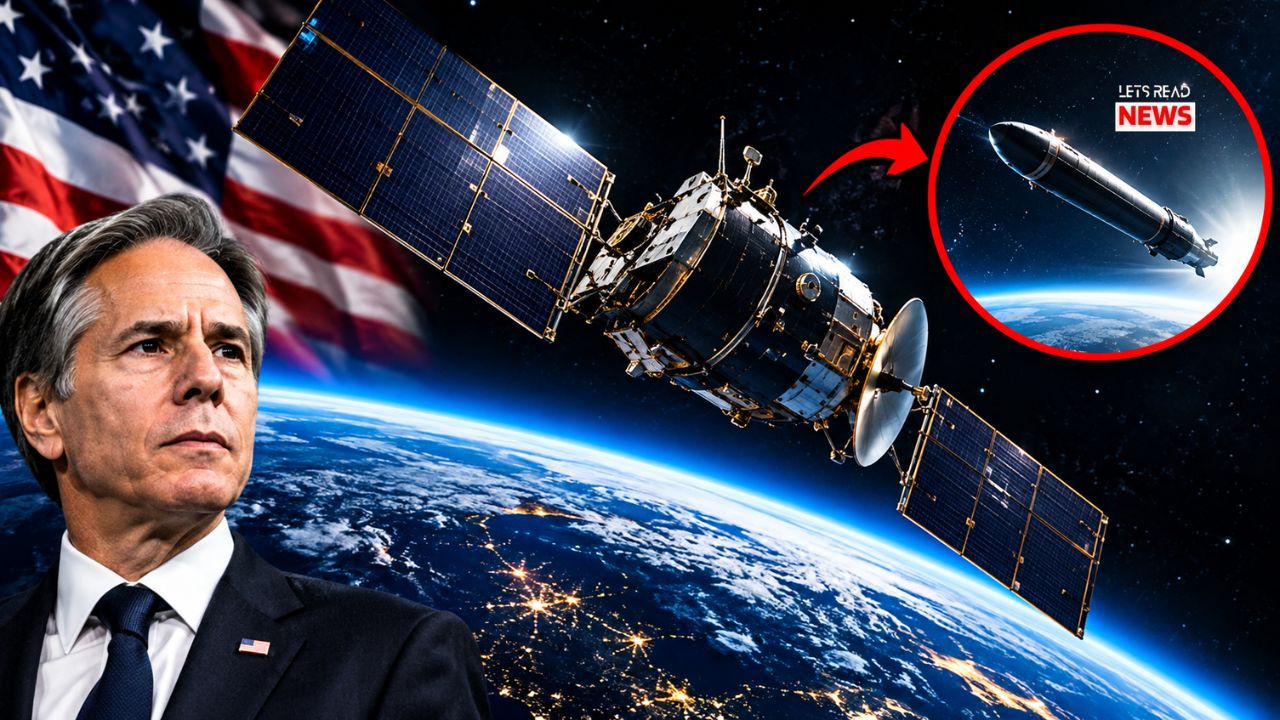
For the first time, Washington has publicly acknowledged that American weapons are already deployed in orbit. The Pentagon has revealed almost nothing about them—leaving one crucial question unanswered: what can these weapons actually do?
The United States has confirmed something it had previously avoided saying publicly: American weapons are now operating in space.
Air Force Secretary Troy Meink made the disclosure on September 14 at the annual Air, Space & Cyber Conference in Maryland, saying the United States has deployed “on-orbit space control weapons capable of defending the Joint Force against hostile adversary action.”
He did not say what the weapons are.
He did not reveal how many have been deployed.
He did not identify their orbits.
And he did not explain exactly how they would attack or disable an adversary.
That lack of detail may be the most important part of the announcement.
For decades, the United States, Russia and China have developed capabilities that can interfere with or attack satellites. But Washington has now crossed an important public line by acknowledging that at least some American systems designed for space control are already in orbit.
The question is no longer simply whether space could become a battlefield.
It is what happens if one already exists.
What does “space control weapon” actually mean?
The phrase sounds straightforward, but it covers a broad range of technologies.
According to the U.S. Space Force, space-control capabilities can use both kinetic and non-kinetic methods to affect an adversary’s space systems, and those capabilities can have defensive or offensive purposes.
That could include technologies designed to interfere with communications, disrupt sensors or otherwise affect an opposing satellite.
More destructive systems could potentially damage or disable another spacecraft.
But it is important not to assume that the United States has deployed a particular type of weapon based solely on the announcement.
Washington has not disclosed the specific system.
That leaves analysts trying to interpret a deliberately broad description.
Why are satellites so important to modern warfare?
The reason this announcement matters goes far beyond space.
Modern militaries depend heavily on satellites.
They can provide:
- communications
- navigation
- missile warning
- intelligence
- surveillance
- weather information
- timing signals
- battlefield connectivity
The U.S. military’s dependence on space-based systems means that an attack on satellites could affect operations on Earth.
And the dependence isn’t limited to the military.
Civilian systems also rely on satellite infrastructure.
Navigation, telecommunications, financial timing and other services can depend on space-based systems.
That creates a strategic problem.
If an adversary can interfere with satellites without directly attacking a military base or city, it could potentially disrupt military operations while keeping the conflict in a different domain.
Why did the United States reveal this now?
Meink described the deployment as part of an effort to increase readiness against existing threats.
The announcement comes as Washington has become increasingly concerned about Chinese and Russian counter-space capabilities.
The United States has previously accused both countries of developing systems capable of threatening satellites.
Russia has conducted an anti-satellite missile test, while U.S. officials have warned about Russian and Chinese activities involving spacecraft and other counter-space technologies.
The public disclosure may therefore serve another purpose besides informing the public.
It can send a message to potential adversaries:
If you attack American satellites, the United States says it now has systems in orbit capable of responding.
That is the logic of deterrence.
But deterrence can have another consequence.
An American weapon can encourage an adversary to develop its own.
China and Russia are already responding
China has criticized the U.S. announcement.
Chinese officials have called for Washington to stop expanding military capabilities in outer space and warned that the move could contribute to an arms race.
Russian officials have also objected to the deployment.
The reactions demonstrate the problem Washington now faces.
The United States may view orbital weapons as a way to discourage attacks.
China and Russia may view the same systems as evidence that they need stronger capabilities of their own.
That creates what security experts call a security dilemma.
One country’s attempt to become safer can make another country feel less secure.
Space warfare doesn’t necessarily mean explosions
One of the biggest misconceptions about space weapons is that warfare has to look like a missile destroying a satellite.
It doesn’t.
A conflict in orbit could involve technologies that interfere with a satellite without physically destroying it.
For example, electronic interference could potentially disrupt communications or sensors.
A satellite could also be maneuvered close to another spacecraft.
And kinetic attacks remain possible—but they create a serious problem of their own.
Orbital debris.
When a satellite is destroyed, thousands of pieces of debris can be created.
Those fragments travel around Earth at extremely high speeds.
A small piece of debris can damage another spacecraft, potentially creating even more debris.
That can produce a cascading problem sometimes called the Kessler Syndrome.
In the worst-case scenario, heavily contaminated orbital regions could become increasingly difficult to use.
Russia’s 2021 anti-satellite missile test demonstrated the danger. The destruction of a Russian satellite generated a large debris field and drew international criticism.
The United States isn’t saying space is suddenly a battlefield
There is an important legal distinction here.
The 1967 Outer Space Treaty prohibits countries from placing nuclear weapons and other weapons of mass destruction in orbit.
It does not impose a blanket prohibition on every conventional weapon or military activity in space.
That distinction matters because the new U.S. disclosure does not automatically mean Washington has violated the treaty.
The larger issue is how these systems are used.
A world in which countries maintain satellites for communication, navigation and observation is very different from one in which nations routinely deploy offensive weapons capable of attacking each other’s spacecraft.
The latter could make every major military satellite a potential target.
What does this mean for GPS?
This is where the issue becomes relevant to ordinary people.
GPS and similar satellite navigation systems are deeply integrated into modern infrastructure.
Military operations depend on satellite positioning and timing.
So do transportation systems, logistics, communications and many commercial applications.
That doesn’t mean the new U.S. weapons threaten GPS.
There is no evidence from the public announcement that these weapons are targeting GPS satellites.
But the broader development highlights how dependent modern societies have become on infrastructure operating hundreds or thousands of kilometres above Earth.
The battlefield may be in orbit.
The consequences could be felt on the ground.
And then there is Golden Dome
The announcement also comes as the Trump administration pursues its Golden Dome missile-defense program.
The administration has discussed space-based components for the broader missile-defense architecture.
But these should not be treated as the same thing.
The weapons Meink disclosed are described as existing on-orbit space-control weapons.
Golden Dome is a broader missile-defense initiative that includes proposed future capabilities.
The Congressional Budget Office has estimated that the space-based components of the proposed missile-defense architecture could cost hundreds of billions of dollars over two decades.
That means America’s military presence in space could become significantly larger even beyond the weapons that have now been acknowledged.
What we still don’t know
The biggest unanswered questions are remarkably basic.
What are the weapons?
The Pentagon hasn’t said.
How many are there?
Not disclosed.
When were they launched?
Not publicly specified.
What can they target?
Unknown.
Are they primarily defensive or offensive?
Officials describe them as capable of both defensive and offensive space-control missions, but the actual systems remain classified.
Where are they?
The United States has not revealed their orbital locations.
Those unanswered questions are likely intentional.
Revealing the capabilities of a weapon designed to operate against an adversary’s space systems could compromise its military value.
The bigger story is not that weapons are finally entering space
In one sense, weapons and military capabilities have been associated with space for decades.
The United States and Soviet Union began developing military space technologies during the Cold War.
Satellites have long supported intelligence, communications, navigation and missile warning.
The difference now is how openly governments are discussing the ability to fight over space itself.
The United States has now publicly acknowledged that it has deployed weapons capable of conducting space-control missions.
That changes the conversation.
Instead of asking whether space could eventually become a military battlefield, governments increasingly have to consider how to prevent conflict there from spreading.
Because if satellites become targets, the consequences won’t necessarily stay in orbit.
Modern life depends on space more than most people realize.
And the next major conflict between great powers may involve not only ships, aircraft, missiles and drones—but machines moving silently around Earth at thousands of kilometres per hour.
The United States has not publicly identified the weapons it says are deployed in orbit. Claims about specific systems should therefore be treated as unconfirmed unless supported by official or independently verified evidence.
Recommended for you: