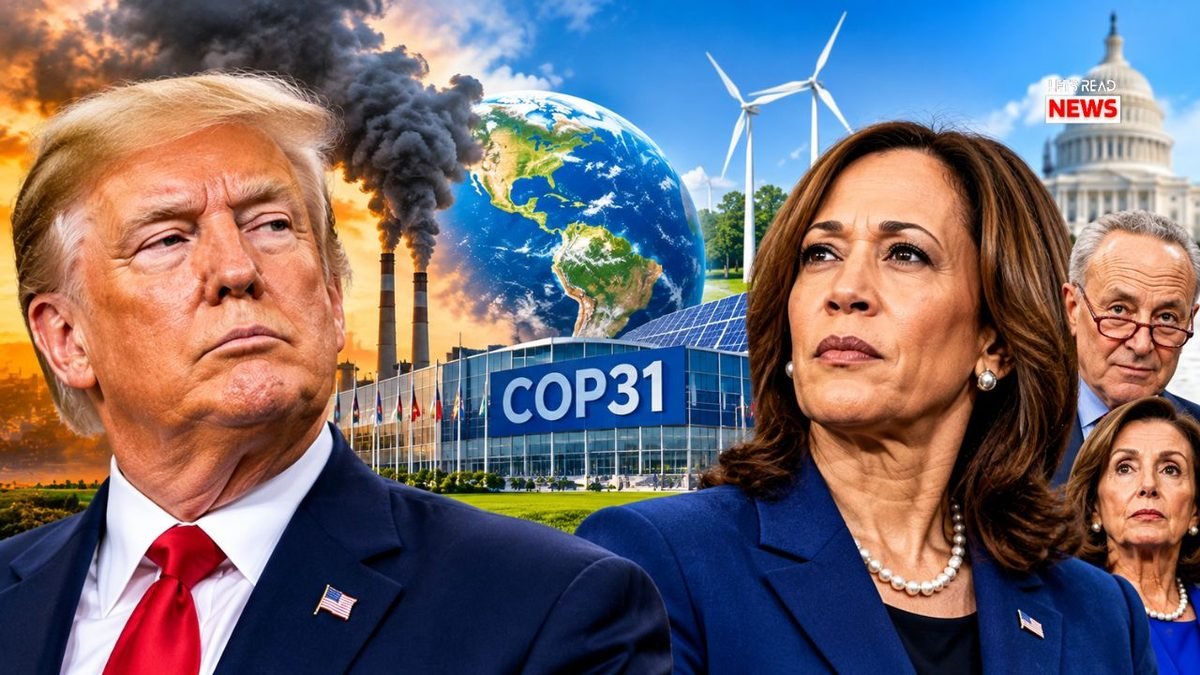
The US election has given Democrats a stronger voice in Washington just as world leaders gather in Turkey for COP31. The bigger question is whether Congress can influence America’s climate direction while Donald Trump remains in the White House.
The United States is entering another major international climate conference with an unusual political situation: the federal government is stepping away from international climate cooperation, but the country’s domestic political landscape is shifting in the opposite direction.
Democrats’ victory in the November 3 midterm elections has raised hopes among climate advocates that some of President Donald Trump’s environmental policies could face stronger resistance. The result is also attracting attention beyond Washington, particularly as representatives from nearly 200 countries gather in Antalya, Turkey, for the United Nations climate summit known as COP31.
André Corrêa do Lago, Brazil’s diplomat who presided over COP30, believes the American election could have an “immense impact” on this year’s negotiations.
In an interview with Spain’s EFE news agency, Corrêa do Lago argued that the new political balance in Washington could slow the weakening of environmental protections introduced under Trump. However, he does not expect the United States to return to the Paris Agreement in the immediate future.
That distinction matters. A change in Congress could influence American climate policy, but it does not automatically reverse decisions made by the president or restore the country’s international commitments.
For COP31, the challenge is therefore bigger than one election: how much influence can American lawmakers, businesses, universities and state governments have when the federal administration is largely absent from the negotiations?
Why the US midterm elections matter for COP31
The American midterm elections are usually seen as a domestic political contest. But their consequences can extend far beyond the United States, particularly when the world’s largest economies are negotiating international policies.
Democrats’ gains in Congress could give them more opportunities to investigate federal environmental decisions, challenge regulatory changes, influence legislation and put pressure on the administration.
One area of concern is methane emissions from the oil and gas industry.
Methane is a powerful greenhouse gas that contributes significantly to global warming. It can escape during the production, processing and transportation of natural gas and oil. Another related issue is gas flaring, the practice of burning excess natural gas at oil production sites.
Environmental advocates have pushed for stronger monitoring and tighter restrictions on both activities because reducing methane emissions can deliver climate benefits relatively quickly.
Corrêa do Lago specifically identified the weakening of rules concerning methane leaks and natural gas flaring as areas where the new political balance could make a difference.
However, congressional influence has limits.
Even with control of both chambers, Democrats would need to navigate the legislative process, secure sufficient votes and contend with the president’s veto power. Congress can also exercise oversight, but changing existing federal regulations may require separate legal and administrative processes.
In other words, the election may make environmental rollbacks more difficult, but it does not guarantee that they will be reversed.
Trump remains a major obstacle to America’s return to climate diplomacy
The political shift in Washington comes against the backdrop of Trump’s decision to withdraw the United States from the Paris Agreement for a second time.
The 2015 agreement established a framework for countries to work together to limit global temperature increases and strengthen their responses to climate change.
The US withdrawal has created uncertainty about America’s role in international climate cooperation.
This matters because the United States is one of the world’s major economies, energy consumers and greenhouse gas emitters. Its decisions on fossil fuels, electricity generation, industrial production and investment can influence markets and policies in other countries.
Corrêa do Lago has acknowledged that he does not expect Washington to rejoin the Paris Agreement immediately.
That means international negotiators cannot simply assume that a Democratic victory in Congress will restore the previous American climate position.
The White House still controls the executive branch, and the president continues to shape federal policy and the country’s diplomatic priorities.
For other countries, this creates a difficult question: should they wait for America’s political direction to change, or accelerate climate cooperation without Washington’s leadership?
The discussions in Antalya suggest that the latter approach is becoming increasingly important.
America may be absent from official negotiations, but not from climate action
One of the most important points raised by Corrêa do Lago is that the United States is much larger than its federal government.
Even when Washington does not participate in official COP negotiations, American companies, universities, research institutions, state governments and civil society organizations can continue working on climate-related projects.
In a separate interview with China’s CGTN, republished by Bastille Post, the Brazilian diplomat highlighted the continuing involvement of these groups in the international climate action agenda.
This distinction is important because climate policy is not implemented only through international agreements.
Private companies decide where to invest in electricity generation, manufacturing and transportation. Universities develop technologies and conduct research. State and local governments establish their own environmental policies and infrastructure priorities.
These activities can continue even when federal climate policy changes direction.
A stronger Democratic presence in Congress could also give these groups a more supportive political environment, although the practical impact will depend on legislation, funding and decisions by the administration.
For international businesses, the uncertainty itself matters. Companies investing in renewable energy, electric vehicles, batteries and low-emission manufacturing need to understand whether future American policies will support or complicate their plans.
Why China is gaining influence in the global energy transition
The debate over America’s role also highlights the growing importance of China.
Corrêa do Lago credited China with helping reduce the cost of solar panels by approximately 95%, making solar technology more affordable for developing economies.
The broader significance is that the energy transition is increasingly shaped by industrial capacity, manufacturing costs and access to technology, not just diplomatic promises.
China has developed a powerful position in the global solar manufacturing industry. Lower equipment costs have helped more countries consider renewable energy projects that were previously expensive or financially difficult.
For developing economies, affordable solar technology can offer several advantages:
- Lower electricity costs: Solar installations can reduce dependence on expensive imported fuels, depending on financing, storage and grid conditions.
- Greater energy security: Countries can diversify their electricity supply rather than relying entirely on imported oil, gas or coal.
- New industrial opportunities: Investment in renewable energy can support manufacturing, installation, maintenance and technical employment.
- Reduced emissions: Replacing fossil-fuel electricity with clean energy can lower greenhouse gas emissions.
However, China’s growing influence also creates economic and geopolitical questions.
Countries must consider supply-chain dependence, domestic manufacturing, trade competition and the long-term security of their energy infrastructure.
For the United States, this creates another dimension to the climate debate. The competition is not only about environmental rules; it is also about who will lead the industries that shape the future energy economy.
What COP31 will focus on in Turkey
COP31 takes place in Antalya from November 9 to November 20, 2026.
Unlike previous climate conferences with a single leadership structure, this year’s summit has an unusual division of responsibilities. Türkiye is hosting the conference and overseeing its action agenda, while Australia is leading the formal negotiations through Climate and Energy Minister Chris Bowen.
The summit is expected to focus on turning existing climate commitments into practical action.
Several issues are likely to shape the discussions.
1. Moving away from fossil fuels
Countries face growing pressure to explain how they will reduce dependence on coal, oil and natural gas while maintaining reliable and affordable energy supplies.
The challenge is particularly difficult for economies that depend heavily on fossil-fuel production or lack sufficient clean-energy infrastructure.
2. Climate finance for developing countries
Developing nations argue that they need financial support to adapt to climate impacts and invest in cleaner energy systems.
For countries facing floods, droughts, extreme heat and rising sea levels, climate adaptation is not a distant environmental ambition. It is an immediate economic and development requirement.
The question is whether wealthier nations will provide sufficient funding and whether developing countries will be able to access it.
3. Electrification and clean energy
Expanding electricity use in transport, buildings and industry could reduce dependence on fossil fuels, provided that electricity itself becomes cleaner.
Türkiye has placed electrification among its priorities, including an ambition to raise the global electrification rate to 35% by 2035.
4. Methane and industrial emissions
Reducing methane leaks and unnecessary gas flaring is another important opportunity for countries seeking relatively rapid emissions reductions.
This issue is particularly relevant to the American political debate because US energy regulations could influence the industry’s approach to monitoring and controlling emissions.
5. Protecting forests
Brazil is also expected to push forward its roadmap for reducing deforestation by 2030.
Forest protection matters because forests absorb carbon dioxide, support biodiversity and help maintain water cycles. Their destruction can release stored carbon and increase environmental pressure on surrounding communities.
Why developing countries, including India, are watching closely
The outcome of COP31 will matter far beyond the United States and Europe.
Developing economies face a difficult balancing act: they need reliable electricity, expanding industries, new jobs and economic growth, while also dealing with climate-related risks.
India is an important example.
The country needs to expand its energy infrastructure to support manufacturing, urbanisation and rising electricity demand. At the same time, extreme heat, irregular rainfall, floods and other climate-related risks create serious challenges for agriculture, infrastructure and public health.
For India and other developing nations, climate negotiations are not simply about adopting ambitious emissions targets.
They are also about who pays for the transition, who provides technology and whether countries can pursue economic development without being forced into identical energy pathways.
Corrêa do Lago has highlighted the continuing disagreement over climate finance, particularly concerns among European countries about taking on additional public financial commitments.
This disagreement could become one of the most difficult issues in Antalya.
Developing countries want wealthier economies to demonstrate that their financial commitments will translate into accessible funding. Developed countries, meanwhile, face domestic budget pressures and competing spending priorities.
Without progress on finance, ambitious international climate promises may remain difficult to implement.
Brazil wants two major climate roadmaps to move forward
Brazil is also using the Antalya summit to maintain momentum from its COP30 presidency.
Corrêa do Lago said he intends to push two Brazilian roadmaps: one focused on moving away from fossil fuels and another aimed at ending deforestation by 2030.
These proposals reflect two major challenges in global climate policy.
The first is how to reduce dependence on fossil fuels without creating energy shortages or imposing unsustainable costs on households and businesses.
The second is how to protect forests while supporting the economic needs of communities and countries that depend on agriculture, forestry and natural resources.
Both issues require international cooperation, investment and practical implementation.
They also highlight why climate negotiations often become complicated. Countries may agree on the broad objective of reducing emissions but disagree over timelines, responsibilities, funding and the economic consequences of the transition.
Can Democrats change the direction of US climate policy?
The American midterm results have created a new political opportunity for climate advocates, but the outcome will depend on what happens after the election.
Democrats could use their congressional position to scrutinise environmental policy changes, defend existing protections and push for legislation supporting clean energy and emissions reductions.
They could also use hearings and public oversight to keep climate issues in the national debate.
But there are clear limitations.
A presidential veto can block legislation. Federal agencies operate within legal and administrative constraints. Major changes to national energy policy require more than an election result.
And even if Congress takes a stronger climate position, the United States’ international participation will remain a separate question.
The country could see greater domestic political resistance to environmental rollbacks without immediately returning to the Paris Agreement.
That is why Corrêa do Lago’s optimism should be viewed as a sign of changing political possibilities rather than a guarantee of policy reversal.
The bigger question: Can the world move forward without Washington?
COP31 begins at a moment when climate cooperation is being tested by political divisions, economic pressures and competing energy priorities.
The United States remains a major force in the global economy, but its absence from official climate negotiations does not mean international climate action has stopped.
China’s renewable energy manufacturing, Europe’s climate policies, Brazil’s forest protection agenda and the efforts of developing economies all contribute to the direction of the global energy transition.
The Democratic victory in the US midterms could strengthen opposition to Trump’s environmental policies and send a political message that climate issues remain important to American voters.
But the real test will be whether that political shift produces concrete changes in laws, regulations, investment and international cooperation.
For now, COP31 faces a complicated reality: America may not be at the negotiating table as a federal government, but its political choices will continue to influence the future of global climate policy.
The question for the world is no longer simply whether Washington will lead the climate fight. It is whether the rest of the world can maintain momentum while waiting to see what America does next.