
Colombian Military C-130 Hercules Crash in Puerto Leguízamo: Comprehensive Analysis of the Tragedy
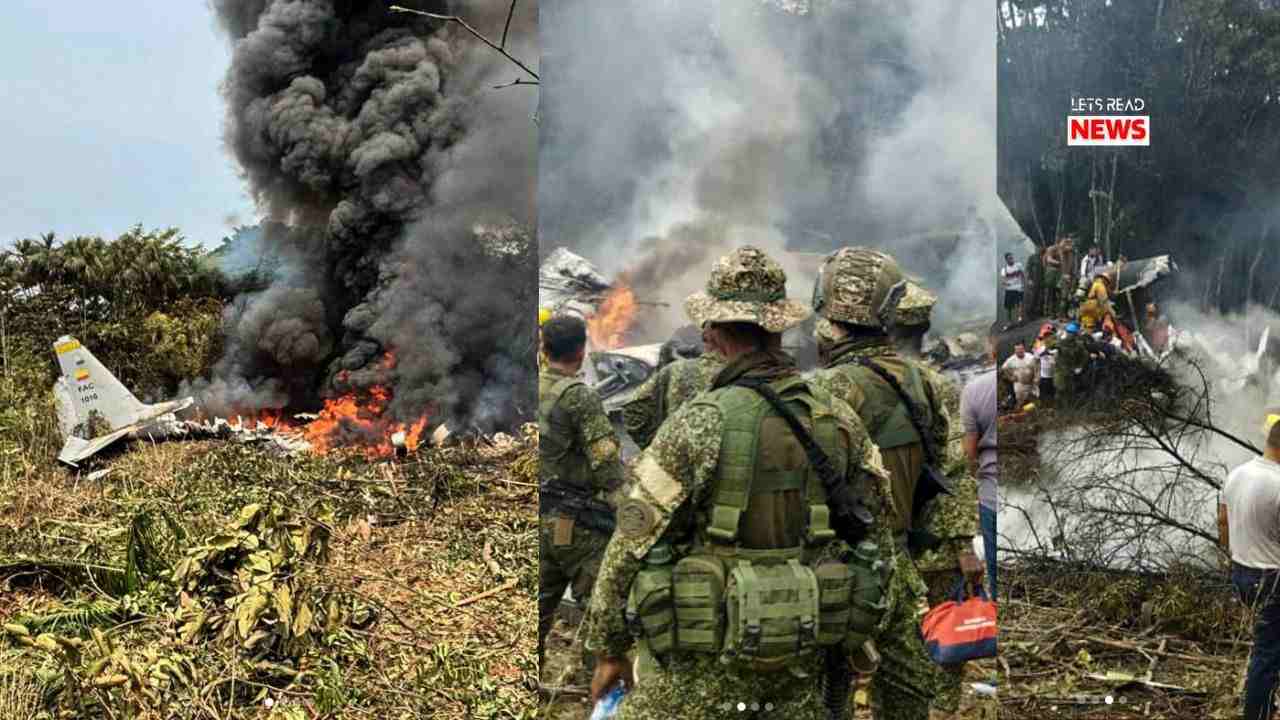
On March 23, 2026, a Colombian Air Force Lockheed Martin C-130H Hercules (registration FAC1016) crashed shortly after takeoff from Caucayá Airport in Puerto Leguízamo, Putumayo Department, in Colombia’s remote southern Amazon region near the borders with Peru and Ecuador. The aircraft was en route to Tres de Mayo Airport in Puerto Asís on a routine troop transport mission. This incident has become the deadliest in the history of the Colombian Air Force, claiming at least 66 lives with four personnel still missing as of March 24.
Lets Read News | 30-Second Brief
• A Colombian Air Force C-130 Hercules crashed shortly after takeoff in Puerto Leguízamo on March 23, 2026, killing at least 66 personnel, with several still missing.
• The aircraft was on a routine troop transport mission when it went down in dense Amazon jungle just 1.5 km from the runway.
• Early reports suggest a possible wing impact during takeoff, followed by a crash and fire that triggered onboard ammunition explosions.
• Rescue efforts have been severely challenged by the remote jungle terrain, with locals playing a key role in saving survivors.
• Authorities confirm no signs of sabotage, as investigations now focus on mechanical, environmental, and operational factors.
Sequence of Events and Crash Dynamics
The plane, carrying 125–128 people (114–115 National Army personnel, 2 National Police officers, and 11 Air Force crew members), lifted off around 9:50 a.m. local time. It suffered an impact near the end of the runway during initial climb-out, with reports indicating a wing may have clipped a tree. The aircraft lost altitude rapidly, crashing into dense jungle approximately 1.5 km from the runway. A post-crash fire erupted, detonating ammunition and explosive devices onboard, which destroyed much of the wreckage and complicated rescue efforts. Thick black smoke billowed from the site, visible in geolocated videos and local media footage.
The C-130H, manufactured in 1984 and transferred to Colombia in September 2020 under the U.S. Excess Defense Articles program, had undergone a full structural overhaul and engine updates between 2021 and 2023. Officials confirmed it was in airworthy condition with a qualified crew. Takeoff from the short, rudimentary jungle airstrip in hot, humid Amazon conditions likely played a role—though the exact cause (mechanical failure, pilot error, environmental factors, overload, or bird strike) remains under full investigation by Colombian authorities, with Lockheed Martin pledging assistance. No evidence points to sabotage or attack by illegal armed groups operating in the area.
Casualties, Human Toll, and Survivor Accounts
Of the 66 confirmed dead, breakdowns include approximately 58 army personnel, 6 Air Force members, and 2 police officers. At least 57 survivors were hospitalized (including 14 in critical condition), with 30 treated at a local military clinic; others were airlifted to Bogotá. Four remain missing. The scale of loss—mostly young soldiers—has devastated military families and the nation. President Gustavo Petro described it as “horrendous” and “something that should not have happened.”
Rescue Efforts: Challenges in a Remote Jungle Environment
The crash site’s inaccessibility—dense Amazon jungle with poor roads—severely hampered initial response. Local residents were the first on scene, heroically pulling wounded soldiers from the burning wreckage and transporting them on motorcycles along dirt roads to nearby clinics. Military vehicles arrived later, but terrain and ongoing fire/explosions delayed full operations. Two aircraft with 74 medical beds were deployed for evacuations. Bodies were moved to the small town morgue, underscoring the logistical nightmare in one of Colombia’s most isolated regions.
Official Responses and Political Context
- Defense Minister Pedro Sánchez: Called it a “tragic accident” and “profoundly painful for the country.” Confirmed no attack and noted ammunition detonation in the fire.
- Armed Forces Head Gen. Hugo Alejandro López Barreto: Reported the 66 deaths and 4 missing, emphasizing no signs of illegal actor involvement.
- Air Force Commander Carlos Fernando Silva Rueda: Detailed passenger numbers and evacuation efforts.
- President Gustavo Petro: Blamed “bureaucratic problems” delaying armed forces modernization, vowing “no further delays—the lives of our young people are at stake.” He urged swift removal of underperforming officials.
This comes amid Colombia’s ongoing internal security challenges. Putumayo is a key coca-cultivation and drug-trafficking hub where FARC dissidents, ELN guerrillas, and other groups remain active despite the 2016 peace accord. The flight supported troop rotations for counter-narcotics and border security operations.
Broader Implications and Analysis Across All Aspects
Military and Aviation Safety: The C-130 has been a reliable “workhorse” for decades, but this older H-model (part of an aging fleet modernized via U.S. aid) highlights vulnerabilities in maintenance, jungle operations, and short-runway takeoffs. A similar Bolivian C-130 crash in February 2026 (killing 20+) raises regional concerns about the type’s use in Latin America.
Strategic and Operational Impact: The loss weakens immediate troop strength in a volatile tri-border zone. Morale among security forces could suffer, potentially affecting anti-drug efforts. It underscores risks of relying on legacy aircraft for high-tempo missions.
Political and Economic Dimensions: Petro’s comments signal pressure for faster fleet upgrades, possibly straining budgets or U.S. relations. It fuels debate on post-conflict military readiness versus peace initiatives.
Human and Social Aspects: Beyond numbers, this is a profound national tragedy affecting hundreds of families. Locals’ rapid response highlights community resilience in underserved areas.
Environmental and Logistical Factors: Jungle crash risks secondary fires, debris pollution, and wildlife impact. Rescue delays reveal gaps in rural emergency infrastructure.
Investigation Outlook: Black box data, wreckage analysis, maintenance logs, and witness statements will clarify if systemic issues (e.g., engine performance in heat/humidity) or human factors contributed. Transparency is critical to prevent recurrence.
In summary, this crash exposes intersecting vulnerabilities: an aging but maintained aircraft, demanding operational environment, remote geography, and broader modernization delays. While not the result of malice, it demands urgent reforms to honor the fallen and safeguard Colombia’s forces. As investigations proceed, the nation mourns one of its worst military aviation disasters.
Read More Articles
- Pentagon’s Secret Iran Ground Invasion Plans Just Leaked — Trump Says “No Troops” But 50,000 Soldiers Are Already Moving (What This Really Means)
- Amazon Just Exposed Interlock Ransomware’s 36-Day Cisco Firewall Zero-Day – The Shocking Truth About Network Edge Attacks in 2026 (And Why Your Organization Is Still at Risk)