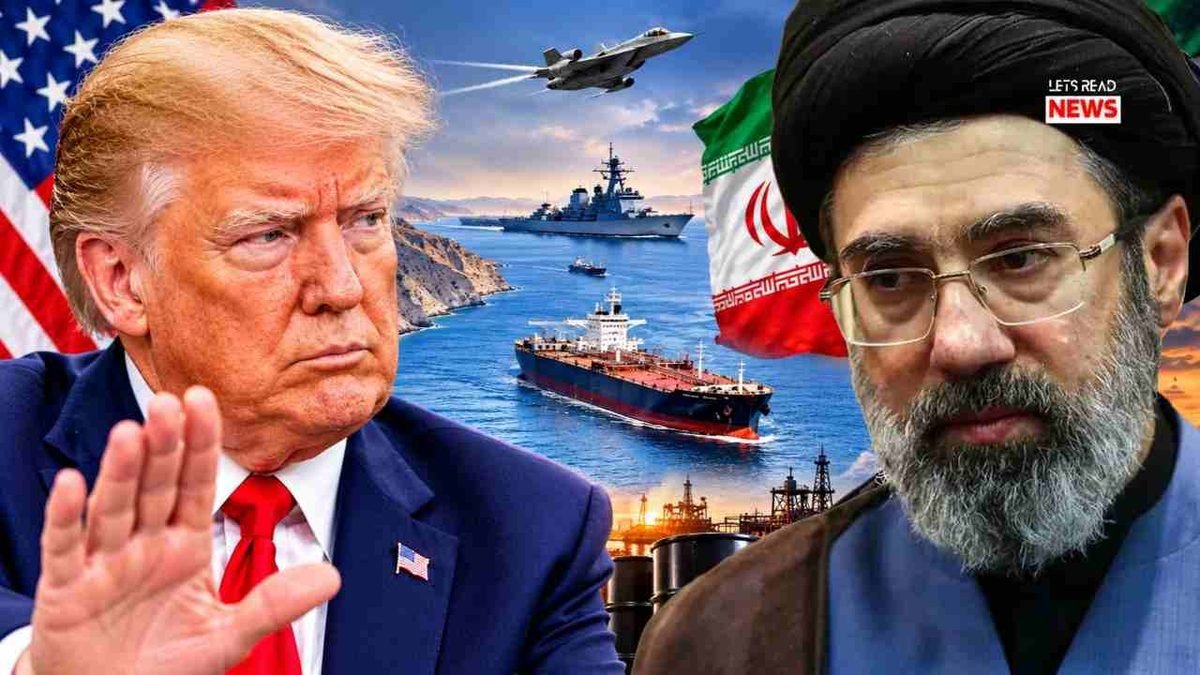
Washington — President Donald Trump spent a 20-minute phone call on Sunday insisting the United States will probably not return to war with Iran — and then, in nearly the same breath, described a target list that included power plants and 38 bridges his military could destroy “in literally one hour.”
The contradiction was the story. Five times during his interview with CNN’s Jim Sciutto, Trump said renewed military action was “highly unlikely.” Each time, the caveat attached itself to the same condition: Iran must sign what he called “a very strong agreement” on its nuclear program and reopen the Strait of Hormuz, the waterway through which Iranian forces have spent eight months harassing commercial tankers.
“They want to make a deal so badly,” Trump said, according to Reuters, before adding the darker footnote: Iran, in his words, is “a failing nation” and “we could finish them off.”
The leverage show
What made the president’s Sunday remarks unusual was not the threat itself — Trump has threatened before — but the specificity of the coercive architecture he laid out on the record. Three aircraft carriers, he said, are now in position, one having just arrived. US warplanes, he claimed, have already dismantled Iran’s air defenses. Tehran, by his account, retains only a tenth of its missile capacity and 15% of its drone fleet.
He offered a rare glimpse into targeting deliberations, naming infrastructure — power plants, dozens of bridges — while noting, almost as an aside, that he would prefer not to strike them because reconstruction would take a decade.
The message to Tehran was layered: the capability is assembled, the targets are chosen, but the trigger is negotiable. Whether that reads as reassurance or ultimatum likely depends on which side of the Gulf you’re sitting on.
The two-day corridor
Behind the rhetoric, a concrete diplomatic sequence is taking shape. Regional officials describe a Qatari proposal structured as a two-day exchange. Washington would lift its naval blockade of Iranian ports and release a portion of frozen Iranian funds; in return, Iran would admit International Atomic Energy Agency inspectors to its bombed nuclear facilities. Only then would the Strait of Hormuz reopen and formal nuclear negotiations begin.
The choreography is deliberate. Each step is reversible, each side’s concession is mirrored, and Qatar — which confirmed Trump called Emir Sheikh Tamim bin Hamad Al Thani on Friday to discuss de-escalation — serves as the trusted intermediary. That same day, Iranian Foreign Minister Abbas Araghchi was on the phone with counterparts across the region, suggesting Tehran is at least willing to let the channel stay open.
Tehran’s counter-position
Iran, however, is refusing the sequence as written. Foreign Ministry spokesman Esmaeil Baqaei set the order in stone: “No final agreement can begin, and the Strait of Hormuz cannot be reopened or safe, unless the U.S. naval blockade ends, Iran’s demands are respected.”
The standoff, then, is less about substance than sequencing — who moves first, and who bears the risk of a bad-faith counterpart. Both capitals want the same endpoint and disagree only on the first step.
Adding a further complication, CNN reports that Iranian hardliners have interpreted last week’s US midterm results as evidence of a weakened Trump presidency, calculating that a president bruised at home may be more inclined to compromise. Trump, characteristically, rejected the premise outright.
Eight months in, no exit
The broader picture remains grim. Eight months into the conflict, neither side has achieved meaningful military or diplomatic gains, and tanker traffic through the strait — a conduit for a fifth of the world’s oil — remains under threat. The strikes Trump acknowledged on Friday against an Iranian air defense system amounted to a limited signal rather than a shift in momentum.
Trump’s Sunday performance suggests a president calibrating between two audiences: reassuring war-weary voters and markets that escalation is improbable, while assuring Tehran that the cost of walking away is total. “Most likely it will not be necessary,” he said of fresh strikes.
In a standoff defined by sequencing, the most telling detail may be that both governments spent the same week talking — to each other through Qatar, and to anyone else who would listen.
Also Read: