Netanyahu’s Sharp Elbow at Spain: Symbolic Slap or Strategic Signal Amid Fragile Ceasefire Brinkmanship?
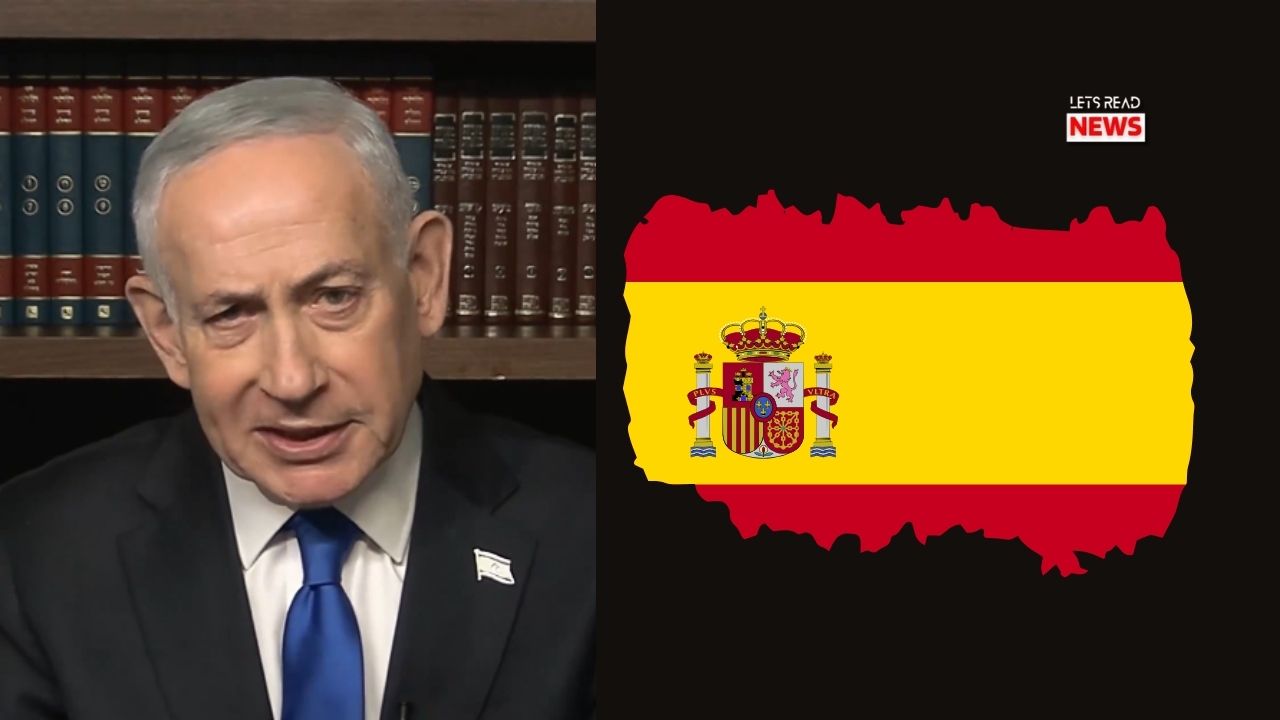
Israeli Prime Minister Benjamin Netanyahu rarely misses an opportunity to draw a bright red line in public. On Friday, he did so again — this time targeting Spain. In a pointed X post, Netanyahu announced he had ordered the immediate expulsion of Spanish representatives from the Civil-Military Coordination Center (CMCC) in Kiryat Gat, a key hub established under President Donald Trump’s Gaza peace framework to manage humanitarian aid, logistics, and ceasefire mechanics into Gaza.
Lets Read News | 30-Second Brief
• Israeli Prime Minister Benjamin Netanyahu has expelled Spanish representatives from a key Gaza coordination center amid rising diplomatic tensions.
• The move follows strong criticism from Spain, led by Pedro Sánchez, over Israel’s military operations in Lebanon.
• Israel says the decision is a response to “anti-Israel bias” and a warning to other European nations.
• The action comes as fragile ceasefire talks involving Iran face new obstacles linked to Lebanon’s escalating conflict.
• Analysts see the move as both a strategic signal and a sign of deepening divisions between Israel and parts of Europe.
The trigger? Spain’s repeated criticism of Israel’s intensified military operations in Lebanon, which Netanyahu framed as “slandering our heroes, the soldiers of the IDF — the most moral army in the world.”
Context: A Ceasefire Already Straining at the Seams
This move lands at the worst possible moment for regional diplomacy. As Iran sets preconditions for talks in Islamabad — demanding a full Lebanon ceasefire and unfrozen assets — Israel continues targeted operations against Hezbollah infrastructure. Lebanese authorities report heavy casualties, including 254 killed in a single day of post-announcement strikes. Spain, under Prime Minister Pedro Sánchez, has been among the most vocal European critics, pushing the EU to suspend its association agreement with Israel and repeatedly condemning civilian impacts in both Gaza and Lebanon.
The CMCC itself is no minor diplomatic outpost. Launched in late 2025 as part of Trump’s 20-point Gaza plan, it brings together Israeli, U.S., and select international partners to coordinate aid flows while maintaining security oversight. Removing Spain sends a clear message: participation is a privilege, not a right — and criticism of IDF operations in Lebanon crosses the line.
Why Spain? And Why Now?
Spain’s position on Israel has hardened over the past two years: recognition of Palestinian statehood, ambassador recalls, and consistent alignment with the most critical voices in Europe. Netanyahu’s government sees this not as principled diplomacy but as performative hostility that rewards Hamas, Hezbollah, and Iran while ignoring the security threats Israel faces. By expelling Spanish reps, Israel is:
- Enforcing accountability for what it calls “political war” against the Jewish state.
- Signaling to other European capitals that there are costs to one-sided condemnations.
- Protecting the integrity of U.S.-led coordination mechanisms from actors perceived as undermining them.
Foreign Minister Gideon Saar echoed this, citing Spain’s “obsessive anti-Israel bias” as incompatible with constructive participation.
Broader Implications in a Multi-Front Crisis
This is more than bilateral theater. It intersects directly with the high-stakes drama unfolding in Islamabad:
- Lebanon as the Flashpoint: Iran and its proxies are leveraging Israeli actions in Lebanon to stall U.S. talks. Netanyahu’s move reinforces Israel’s insistence that operations against Hezbollah are non-negotiable and outside any fragile “everywhere” ceasefire interpretation pushed by Pakistan.
- U.S. Positioning: The Trump administration, which backs the CMCC framework, now sees a key partner (Israel) drawing firm boundaries. This could complicate Vance’s mission in Pakistan but also strengthens the “no daylight” optics between Washington and Jerusalem on core security issues.
- European Rift: Spain’s stance widens the transatlantic and intra-EU divide. While countries like Germany and the UK maintain more balanced (or supportive) positions, Sánchez’s government risks further isolation from practical influence mechanisms in the region.
- Domestic Israeli Calculus: With elections or coalition pressures always in the background, Netanyahu projects strength — refusing to let international criticism constrain military freedom of action.
The Probability and Long-Term Calculus
Short-term, this expulsion is largely symbolic. Spain’s role in Gaza aid coordination was marginal compared to U.S. and Israeli dominance. Madrid will likely respond with further rhetorical escalation, possibly accelerating calls for EU sanctions or more ambassadorial downgrades.
Longer-term, it accelerates the fragmentation of international involvement in post-conflict arrangements. Israel is betting that in a world of rising multipolarity, selective partnerships with reliable actors (U.S., select Gulf states, India) matter more than broad European buy-in. The risk? Alienating moderate European voices and handing propaganda wins to Iran and its allies.
For the United States, this episode underscores a recurring challenge: managing an assertive Israel that prioritizes security maximalism while Washington seeks diplomatic off-ramps with Iran. Trump’s reloaded warships rhetoric and Netanyahu’s zero-tolerance for “hypocrisy” suggest alignment on ends, if not always on timing.
This isn’t just another diplomatic spat — it’s a microcosm of the new rules of engagement in the Middle East: alliances are transactional, criticism has consequences, and no one is shy about exacting an “immediate price.” As the Islamabad clock ticks down, Netanyahu has made clear that Israel will fight the information and diplomatic war with the same resolve it shows on the battlefield. Whether that hardline approach delivers lasting deterrence or deeper isolation remains the defining question of the coming weeks.
Read More: