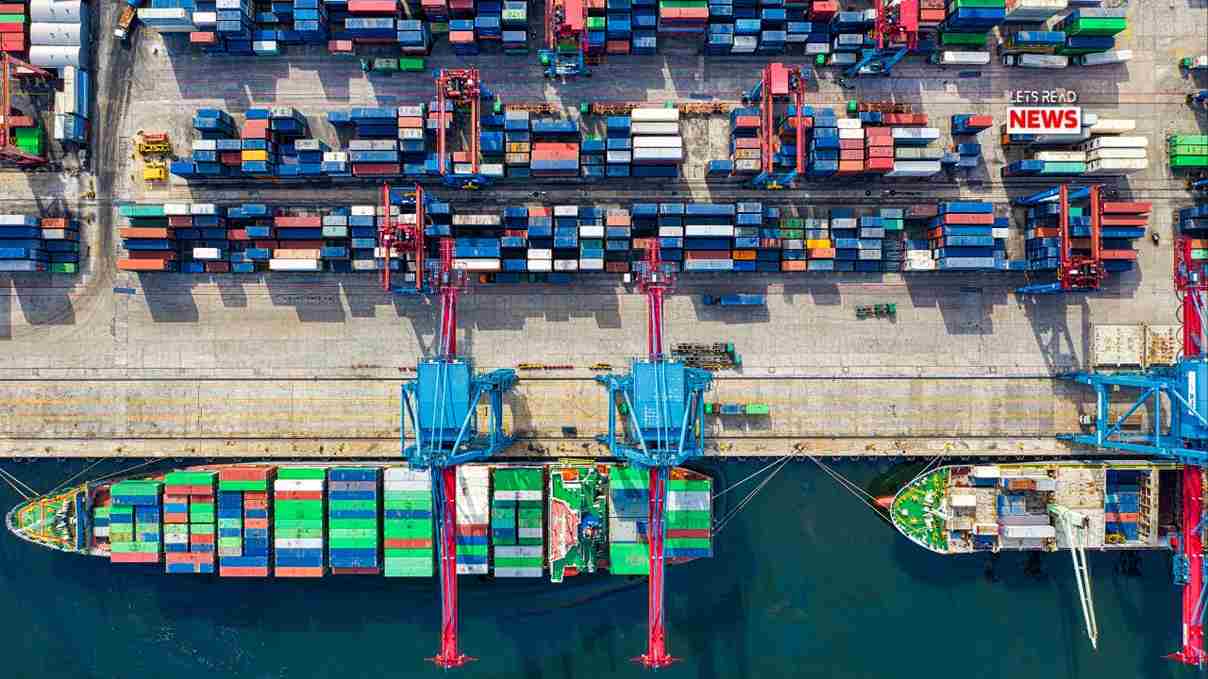
In a bold move announced Wednesday, the Trump administration has fired the opening salvo of what many analysts are already calling “Trade War 2.0.” The U.S. Trade Representative (USTR) Jamieson Greer launched full Section 301 investigations into 16 major economies, aiming to rebuild America’s tariff arsenal after the Supreme Court demolished the legal foundation of the president’s previous trade policy.
Lets Read News | 30-Second Brief
• The Trump administration has launched Section 301 investigations into 16 major economies, including China, India, and the EU, signaling the start of what analysts call “Trade War 2.0.”
• The move follows a U.S. Supreme Court ruling that struck down Trump’s earlier tariff strategy under emergency powers.
• Washington is now rebuilding its tariff tools through legally stronger trade probes that could lead to new duties by summer 2026.
• Major exporters — especially India, China, Vietnam, and the EU — face fresh uncertainty as supply chains and trade relations come under pressure.
• Economists warn the escalating dispute could raise global prices, trigger retaliatory tariffs, and slow worldwide economic growth.
The 16 Targets The list includes: China, the European Union, India, Japan, South Korea, Mexico, Taiwan, Vietnam, Thailand, Malaysia, Cambodia, Singapore, Indonesia, Bangladesh, Switzerland, and Norway. Notably absent is Canada — America’s second-largest trading partner — which suggests Washington may be handling Ottawa through existing USMCA channels rather than new probes.
USTR Greer stated the investigations will focus on “structural excess capacity and production across various manufacturing sectors” and “a range of unfair trading practices.” Public comments close April 15, with a hearing expected around May 5. New tariffs could be imposed as early as summer 2026.
The Supreme Court Trigger On February 20, the Supreme Court ruled 6-3 that President Trump lacked authority to impose broad tariffs under the International Emergency Economic Powers Act (IEEPA). That single decision invalidated dozens of reciprocal tariff deals negotiated over the past year. In response, Trump immediately slapped a temporary 10% global tariff under the older Section 122 authority (which expires in July). The new Section 301 probes are the administration’s long-term workaround — a legally durable path to re-impose targeted, high tariffs without needing emergency powers.
India’s Specific Situation India had just signed a bilateral trade deal in February that capped reciprocal tariffs at 18%. That agreement is now effectively voided by the Supreme Court ruling. Indian exporters (textiles, pharmaceuticals, gems & jewellery, auto parts) face fresh uncertainty. New Delhi must now submit detailed comments by April 15 to defend its manufacturing practices, or risk steep new duties that could slow India’s export growth to the U.S. — its largest single market.
China, EU and Diplomatic Flashpoints The timing is especially tense. Treasury Secretary Scott Bessent leads U.S. officials meeting Chinese counterparts in Paris this week, ahead of a Trump-Xi summit in Beijing later this month. Beijing will almost certainly view the probe as a negotiating hammer. The EU, already locked in steel and subsidy disputes, is preparing retaliatory options. Smaller Asian nations like Vietnam, Thailand and Bangladesh — major garment and electronics suppliers — could see their entire U.S. export models threatened.
Extra Probe on Forced Labor Adding pressure, a separate Section 301 investigation into imports made with forced labor begins Thursday and covers more than 60 countries. This could hit supply chains from Xinjiang (China), parts of Southeast Asia, and even some Indian sectors.
Global Fallout Analysis
- Economic Impact: New tariffs would raise costs for U.S. importers and consumers, especially on electronics, autos, apparel, and pharmaceuticals. Global supply chains already stressed by 2025–26 inflation could fracture further.
- Retaliation Risk: China, EU, India, Japan and South Korea have historically responded with their own tariffs on U.S. agriculture, aircraft, and energy. A multi-front trade war could shave 0.5–1% off global GDP growth.
- Winners & Losers: Canada may gain relative advantage. Mexico and Vietnam could face the biggest short-term pain. U.S. manufacturers in protected sectors might cheer, but exporters will suffer.
- Strategic Goal: Trump is using Section 301 to force trading partners back to the negotiating table on better terms — exactly the “America First” leverage he promised.
What Happens Next The temporary 10% tariff buys time until July. If the Section 301 probes move fast, replacement tariffs could be in place by late summer. Markets are already pricing in volatility: Asian stocks dipped Wednesday, while the dollar strengthened.
Bottom line: The Supreme Court may have struck down one tariff tool, but the Trump administration has quickly built another. Trade War 2.0 is not a possibility — it has already begun. The next 90 days (until the April 15 comment deadline) will decide how painful it gets for India, China, the EU and the rest of the world.